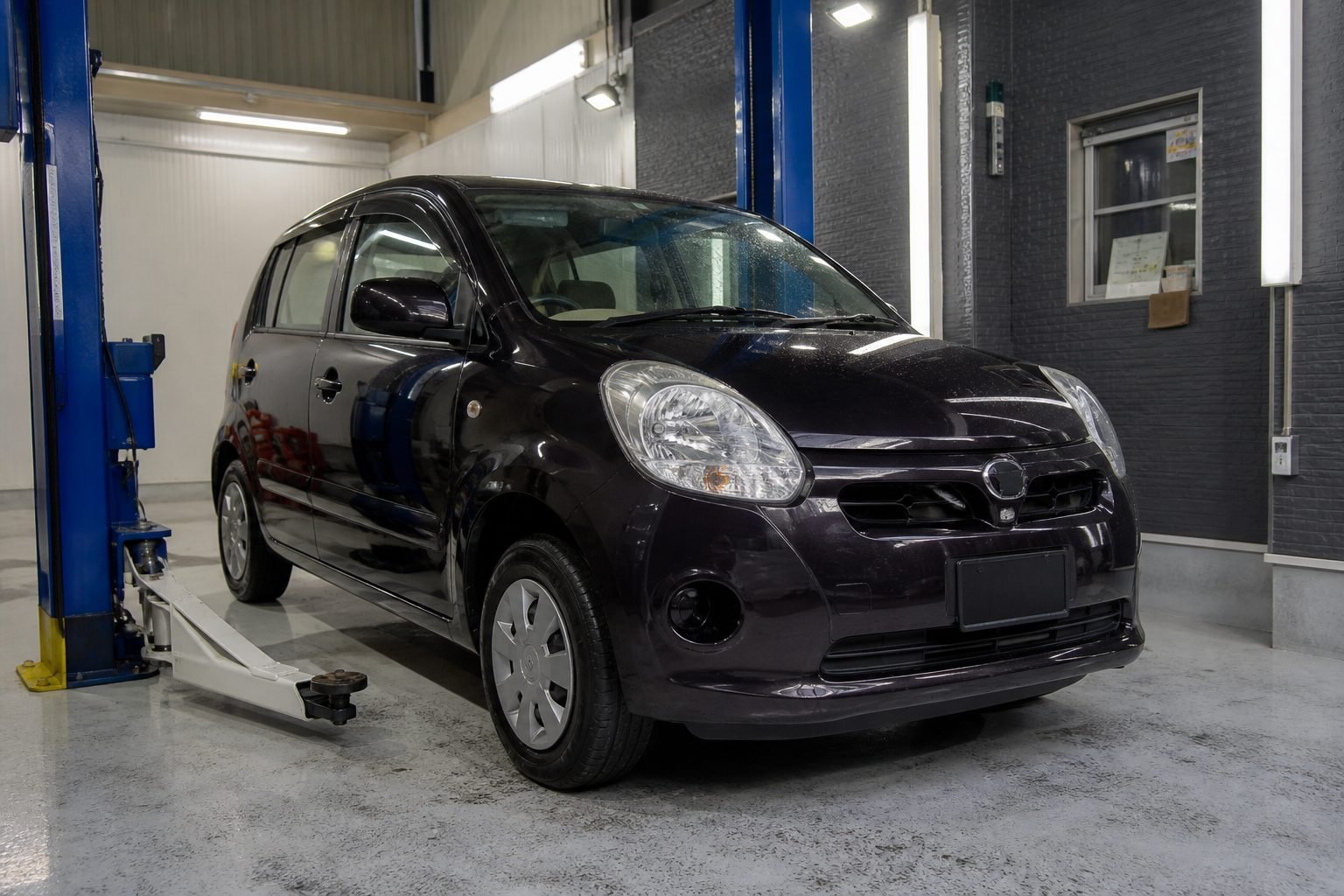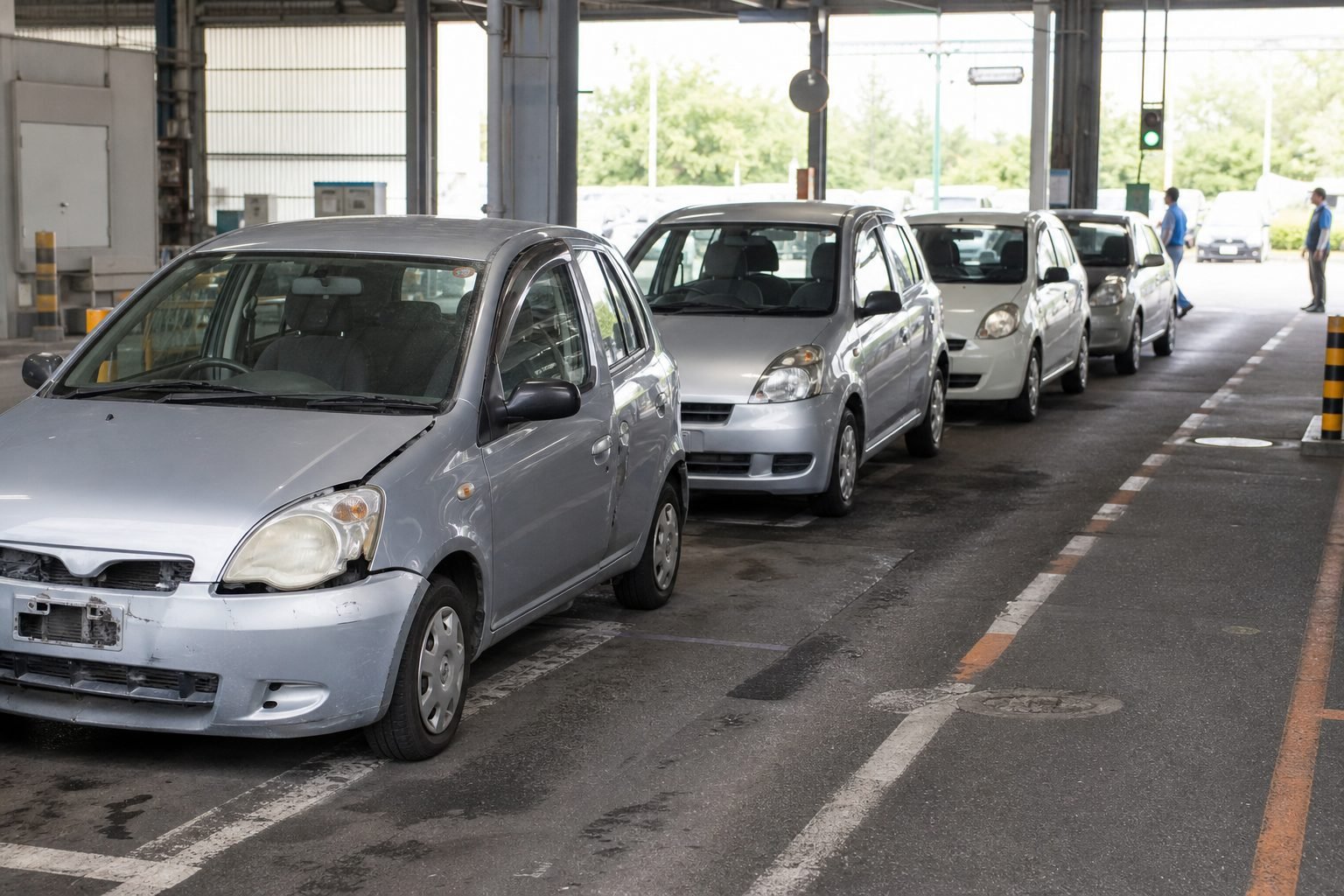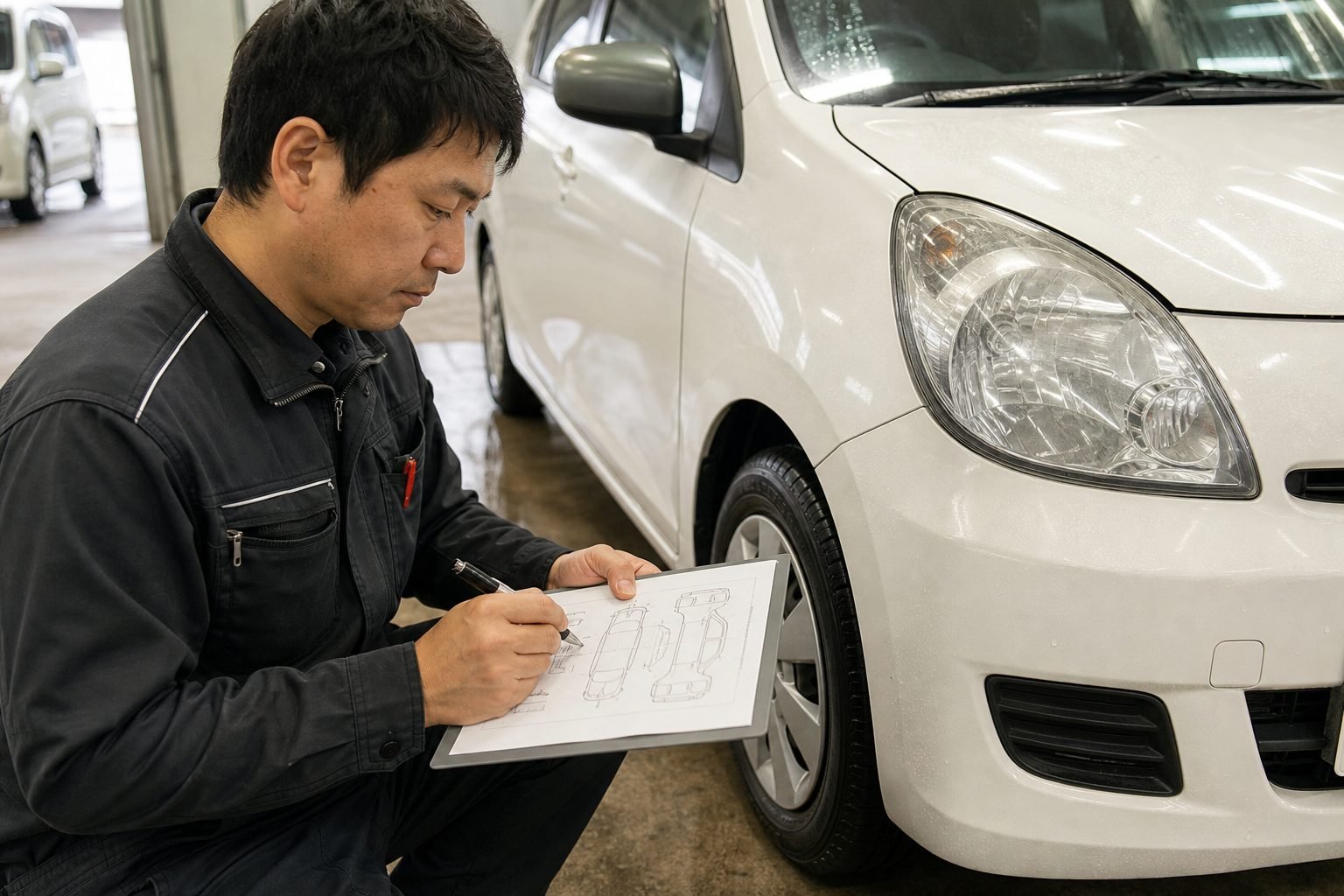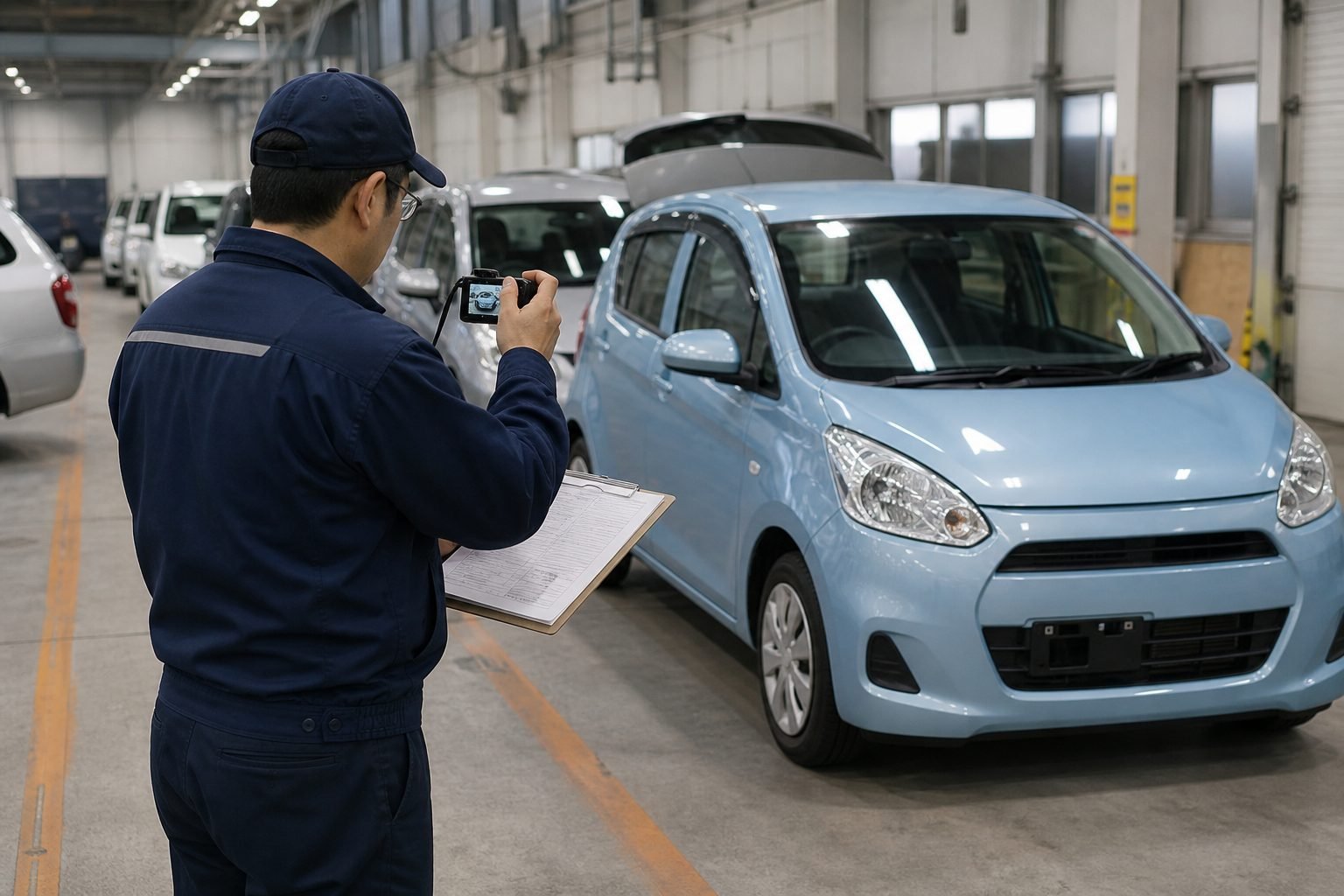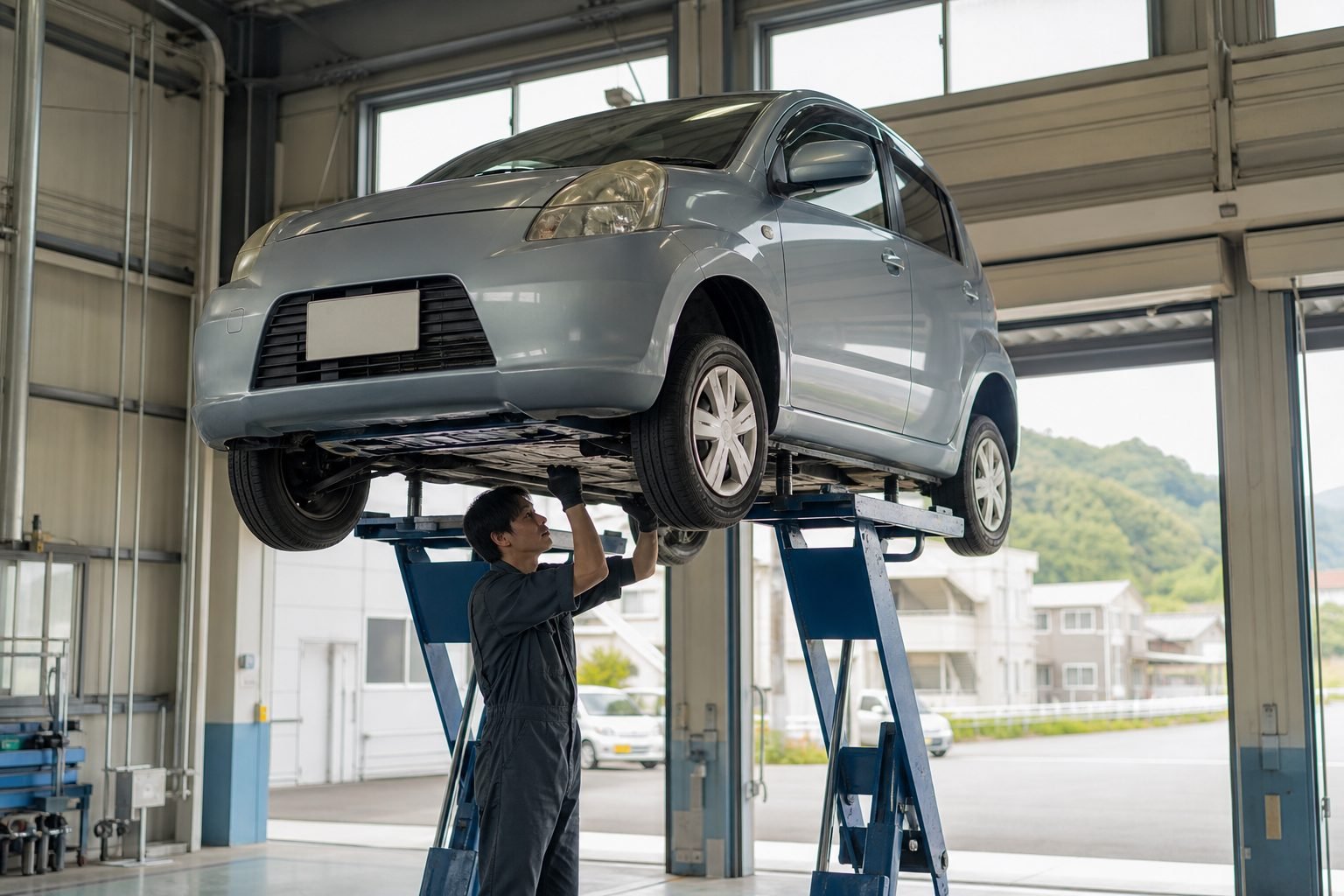
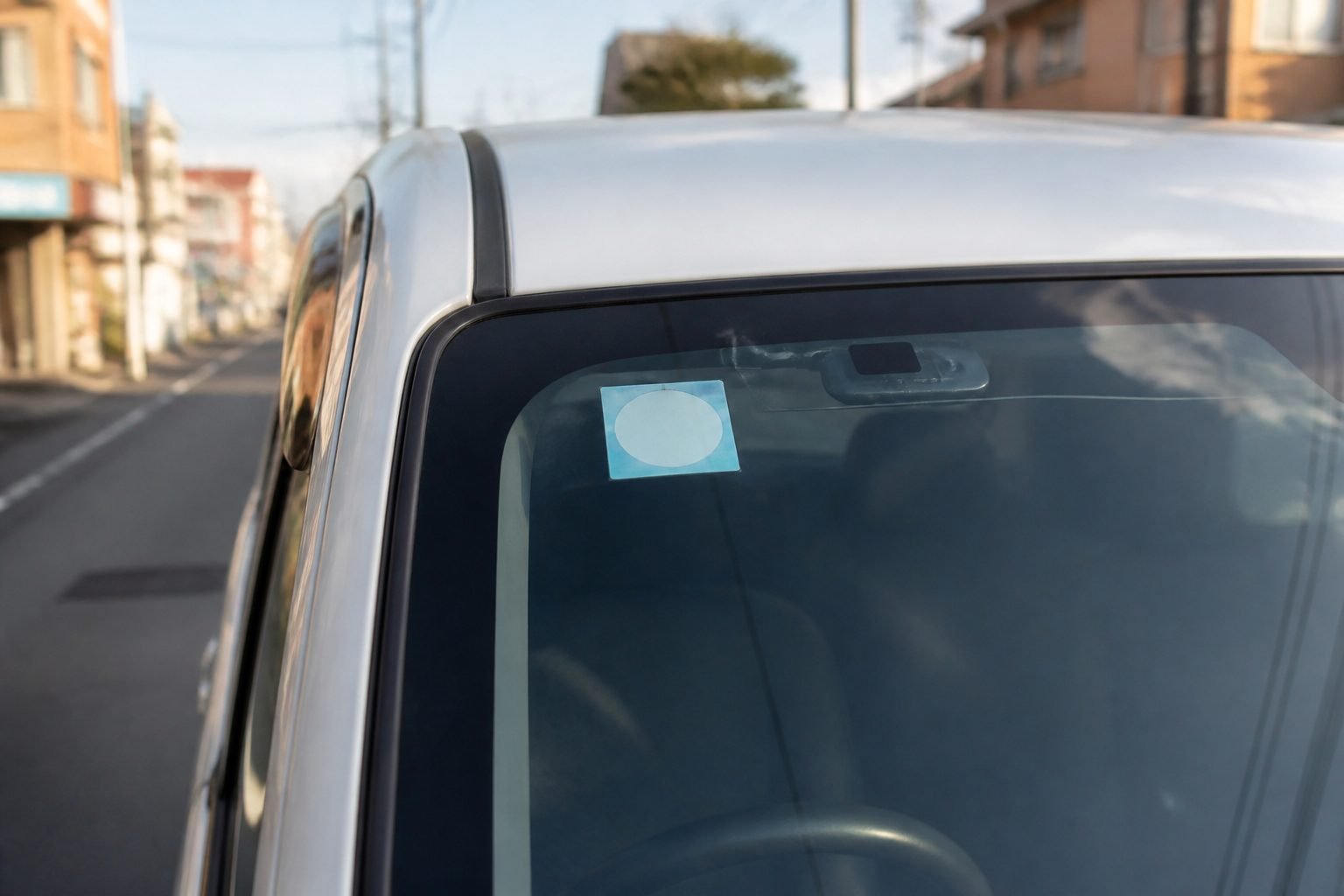
車検 (shaken) is Japan’s periodic safety inspection. For most private used cars it is every two years. The windshield sticker is not a “service coupon.” It is the date after which you may not legally drive the car on public roads without a new inspection (plus valid 自賠責).
The invoice foreigners remember is the shop total. That total is three different things glued together: 重量税 (national weight tax), 自賠責 (compulsory injury liability), inspection stamps, and then parts and labour the garage actually does. Statutory lines are similar nationwide (Okinawa 自賠責 is a different table). Labour is not.
KMC JAPAN helps customers in Sasebo and across Kyushu find Japanese used cars, including affordable kei cars, compact cars, SUVs, minivans and hybrids. We buy and explain cars from Ogori, Fukuoka. We do not run a shaken factory and we do not sell 任意 insurance. Remaining shaken on the 車検証 is one of the first things we read on an auction sheet.
Figures below are a 2026 shopping guide for mainland private cars, written September 2026. Confirm stamps with the transport branch or 軽自動車検査協会, premiums with the insurer, and 重量税 with the 車検証 (weight, first-registration year, eco status). This is not tax or legal advice.
Ask about shaken on a specific car View inventory
Two calendars that matter in 2026
- 1 April 2026 — inspection / 技術情報管理 stamp amounts were revised (typically a few hundred yen). User持込 vs 指定工場 OSS are different lines.
- 1 November 2026 — 自賠責 premiums rise for policies whose insurance period starts on or after that date (Financial Services Agency revision; first general rise in many years).
If you inspect in October with a 24-month 自賠責 that starts before 1 November, you are still on the older premium. If the policy starts in November or later, use the new table. Okinawa and some remote islands use other 自賠責 lists.
Statutory piece 1 — 自賠責 (24 months, mainland, typical private)
Compulsory cover is injury/death to other people only. It is not crash damage to cars. Detail: 自賠責 vs 任意.
- Private passenger (普通・小型乗用) — about ¥17,650 (start through 31 Oct 2026) → about ¥18,560 (start 1 Nov 2026 onward)
- Kei (検査対象軽) — about ¥17,540 → about ¥18,660
Shops often write 24 or 25 months so the policy does not gap the inspection date. Ask which term is on the quote.
Statutory piece 2 — 重量税 (paid at shaken, 2-year private)
Kei is a flat band (not by kilogram). Regular cars step every 0.5 t of 車両重量 on the 車検証. Eco-car reductions can cut this to ¥0 or a lower “本則” amount — only if the car still qualifies. Older cars (13 / 18 years from first inspection) pay more.
Typical kei, 2-year, not eco-exempt:
- Under 13 years: about ¥6,600
- 13 years+: about ¥8,200
- 18 years+: about ¥8,800
Typical private passenger, not eco-exempt, under 13 years, 2-year:
- Up to 1.0 t: about ¥16,400
- Up to 1.5 t (many Fit / Aqua / Note): about ¥24,600
- Up to 2.0 t (many minivans / small SUVs): about ¥32,800
13- and 18-year surcharges jump those lines (for example ~1.5 t at 13 years is often about ¥34,200). Read the 車検証; do not guess from the model name. MLIT / 国税 tables win over this article.
Statutory piece 3 — inspection stamps (after April 2026)
Order of magnitude, continuation inspection:
- Kei user持込: about ¥2,500 (association fee + 技術情報管理)
- Regular user持込: about ¥2,600
- 指定工場 window / OSS: often about ¥1,850–¥2,100
Stamps are the small line. They are not the reason shaken feels expensive.
What a shop actually charges
Add oil, brakes, tires, rust, headlight aim, and the garage’s 基本料. That is why two identical stickers produce two different invoices.
- Kei, little worn — total often about ¥40,000–¥80,000 including statutory lines
- Compact, little worn — often about ¥80,000–¥150,000
- SUV / minivan, old, rusty, or R-grade history — the labour line can exceed the car you bought at auction
User車検 (you take it to the lane) can keep labour down if the car already passes. Most foreigners overestimate how “easy” that is without Japanese and a lift. Ownership context: cost to own a car in Japan. Kei vs regular tax: kei vs regular.
Worked 2026 examples (not quotes)
Kei under 13 years, 24-month 自賠責 starting before 1 Nov 2026, user stamps: statutory roughly 自賠責 ¥17,540 + 重量税 ¥6,600 + stamps ~¥2,500 ≈ ¥26,600 before any mechanic. After November starts, add about ¥1,120 on that 自賠責 line. A shop that also replaces pads can still land you in the ¥50,000–¥80,000 conversation.
1.0–1.5 t compact, under 13 years, same 自賠責 timing: statutory roughly ¥17,650 + ¥24,600 + ~¥2,100–¥2,600 ≈ ¥44,000–¥45,000 before labour. November 自賠責 adds about ¥910. Tires or a rust weld are what blow the “¥80,000 shaken” myth.
Buying a car: remaining shaken is part of the price
A ¥300,000 auction hammer with inspection due next month is not a ¥300,000 car. Prefer 12+ months left, or make the shop/auction price include renewal. Cheap band: under ¥500,000. Sheet codes: R / RA / 修復歴.
CFA Sasebo / SOFA plates follow the VRO / PMV handout, not this civilian 車検 path: Sasebo VRO.
How KMC JAPAN uses this
- We read the shaken date on the sheet in English before you bid
- We would rather source a kei or compact that still has time than “save” ¥40,000 on a dead sticker
- After you own it, you can take it to a local shop — or ask us to arrange shaken (JCI) as a proxy through partner shops from Ogori. We still do not run a government inspection lane
English desk: English-speaking car dealer in Japan. Kyushu buying: buy in Kyushu as a foreigner. Proxy bids: auction proxy.
Confirm current 自賠責 with the insurer, 重量税 with the 車検証 and tax office tables, and stamps with the office that will inspect the car. Shop quotes beat any blog. When you leave Japan, settle shaken and 自賠責 with the next keeper: sell before leaving.