Families living in Japan rarely need a US-size SUV. They need a door that opens in a 2.3 m garage, ISOFIX or a seat belt that actually holds a child seat, and a car they can sell when the visa or tour ends. That is a tall kei, a Sienta / Freed / Roomy, or a compact minivan — not a Land Cruiser you cannot park at the station.
This is a shopping shortlist, not a crash-test ranking and not an official “best of Japan.” Year, mileage, remaining shaken, and the auction sheet still win. KMC JAPAN helps customers in Sasebo and across Kyushu find Japanese used cars, including affordable kei cars, compact cars, SUVs, minivans and hybrids. We read grades in English from Ogori, Fukuoka.
Shortlist a family car View inventory
Decide the body before the badge
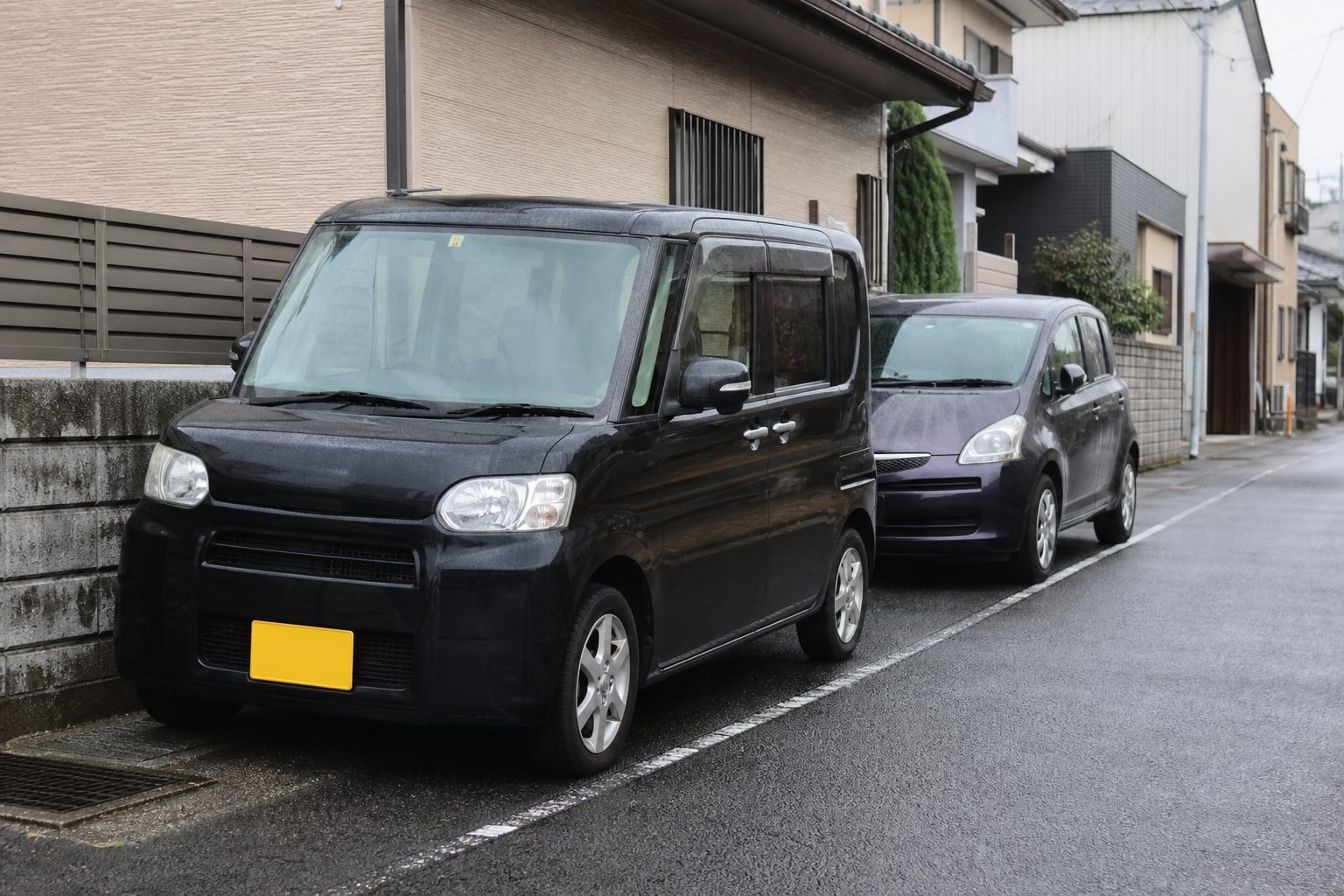
- One or two kids, tight parking, city tax — 軽 with sliding doors (N-BOX, Spacia, Tanto)
- Two or three kids, stroller, still a normal garage — Toyota Sienta, Honda Freed, Toyota Roomy / Tank
- Regular highway + three rows you actually use — Nissan Serena, Toyota Noah / Voxy, Honda Stepwgn — then budget 重量税, fuel, and 車庫証明 for a longer vehicle
- School run plus Fukuoka weekends, no sliding door required — Aqua, Prius, Fit, Note
Kei vs regular tax and size: kei vs regular. Parking: 車庫証明. Empty third-row seats still cost shaken and fuel.
Tall kei — the default Japan family car
Honda N-BOX
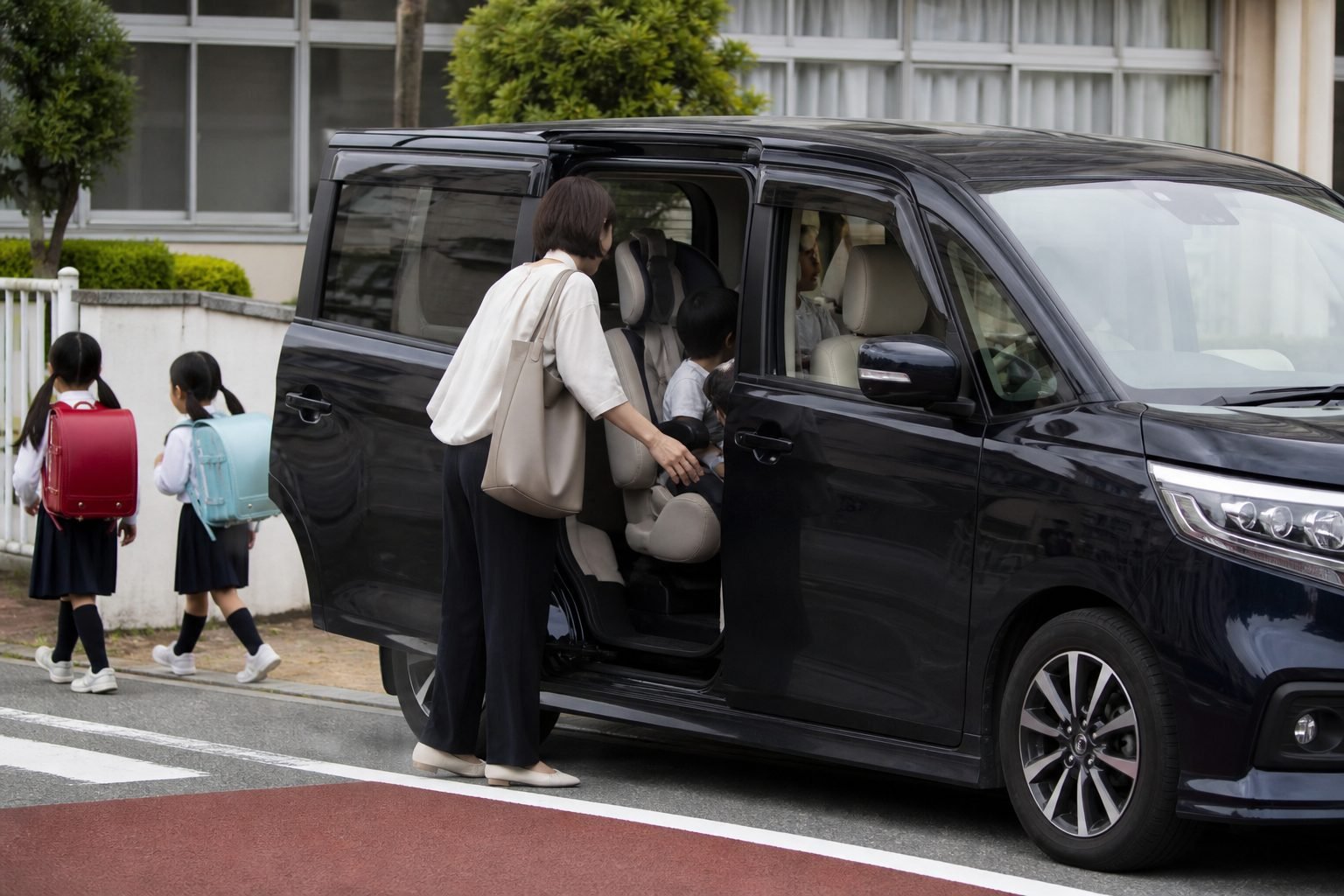
Sliding doors on most family trims, a flat floor, and a footprint that fits 団地 parking. Check door tracks, sliding motors, and CVT behaviour. Custom trims cost more and do not add seats.
Suzuki Spacia / Daihatsu Tanto
Same job as the N-BOX, huge used volume, easy parts. 4WD helps wet hills; it does not turn a kei into an expressway tourer. Under-¥500,000 examples are often old — read shaken: cheap cars under ¥500,000.
Compact people-movers (the sweet spot for many foreigners)
Toyota Sienta
Sliding doors, hybrid on later years, three-row on some trims that are really “2+occasional.” Japanese families buy these in bulk, which helps when you leave: sell before leaving.
Honda Freed
Six or seven seats on many years, still shorter than a US minivan. Look at third-row wear and whether you need seven belts or just six. Hybrid years cost more up front and less at the pump.
Toyota Roomy / Tank (Daihatsu Thor)
Sliding doors on a narrow regular-width car. Better for a double stroller than a Fit; easier to park than a Serena.
When you actually need a minivan
Nissan Serena / Toyota Noah / Voxy / Honda Stepwgn
Highway, grandparents, and three child seats facing forward. Measure the garage first. 重量税 steps with weight — a 1.5–2 t van is not an Aqua shaken bill: shaken 2026. Avoid “seven seats” you never unfold.
Hybrids and hatches with one child seat
Toyota Aqua / Prius, Honda Fit, Nissan Note (e-POWER)
Fuel and resale are the win. Rear doors are ordinary swing doors — painful in a tight 機械式 parking tower. Fine if the garage is open and you do not live in a sliding-door neighbourhood.
Usually the wrong family car in Japan
- Imported SUVs with Japan-only tyre sizes and huge tax
- Two-door sports cars you “will only use on weekends”
- R / RA auction cars you cannot decode — R and RA explained
- A car nobody in the house can legally drive — buying without a Japanese licence
Paper after you pick the body
名義変更: transfer ownership. 任意 the day you drive: insurance complete guide. Kyushu addresses: buy in Kyushu as a foreigner.
CFA Sasebo households (hills + PCS): 10 cars for Navy families in Sasebo. We are not an official Navy list. English desk: English-speaking dealer in Japan.
Tell us ages of kids, garage width, kei-or-not, and remaining shaken. We shortlist Ogori stock and Kyushu auctions — we do not invent a nationwide “#1 family car” sticker.