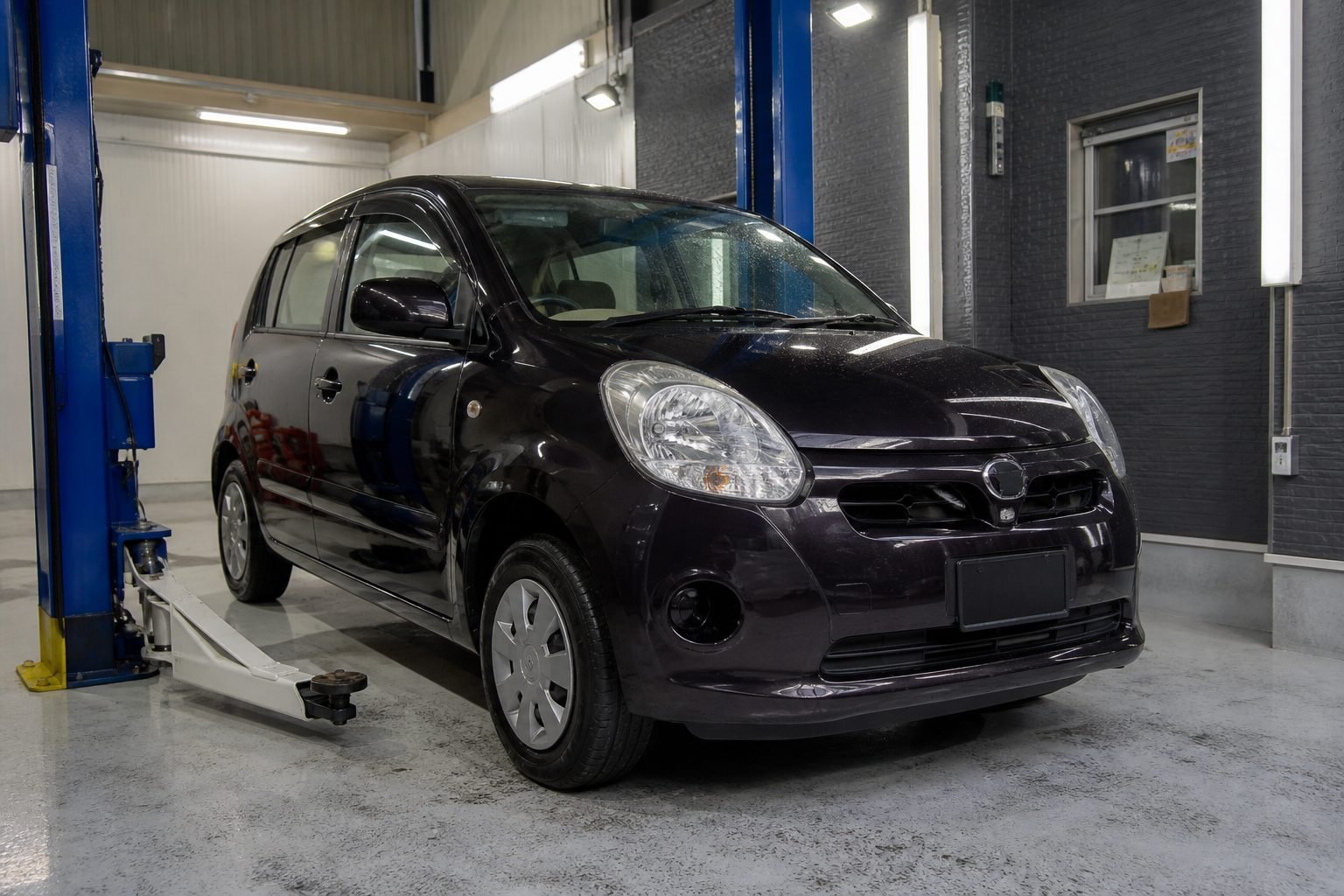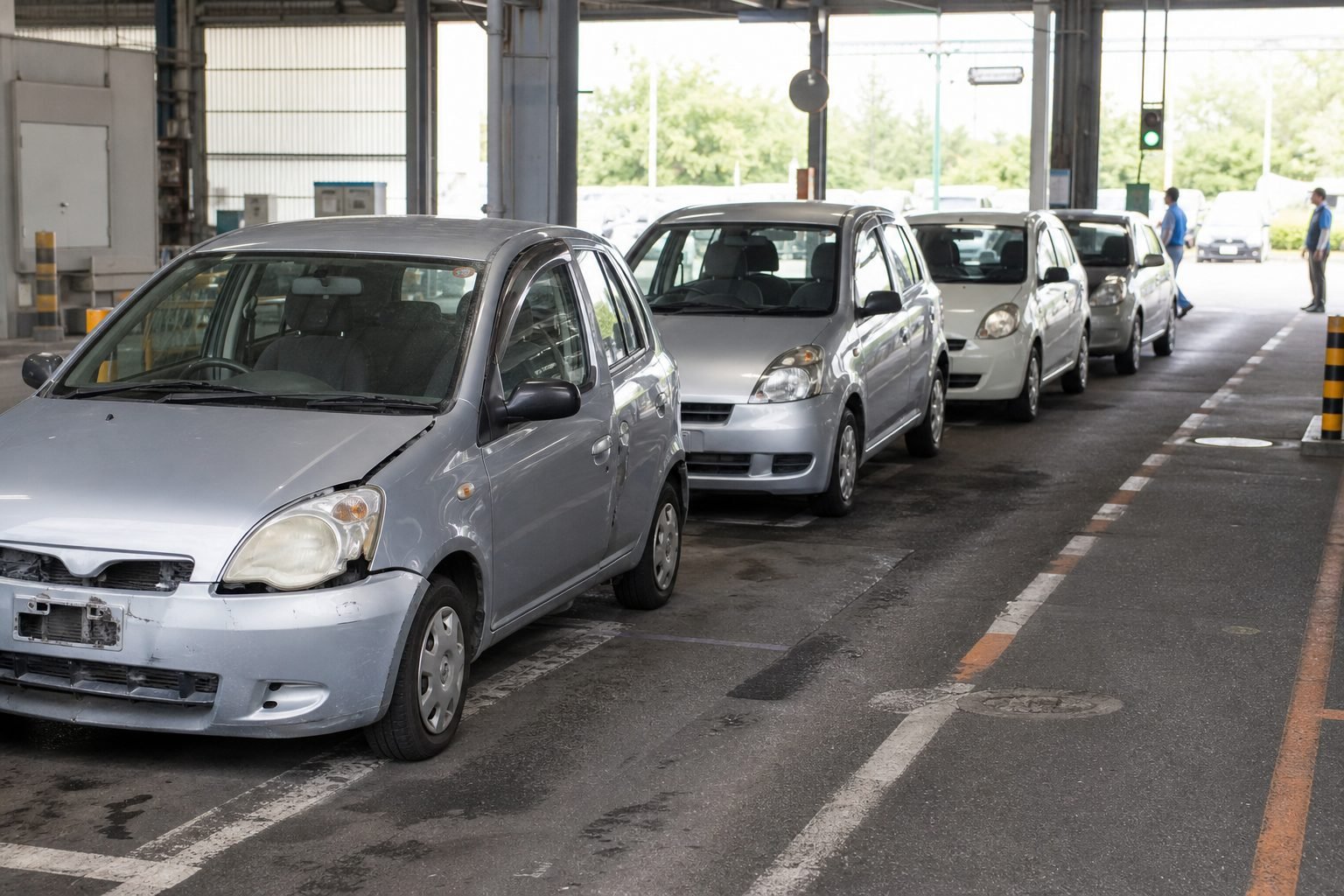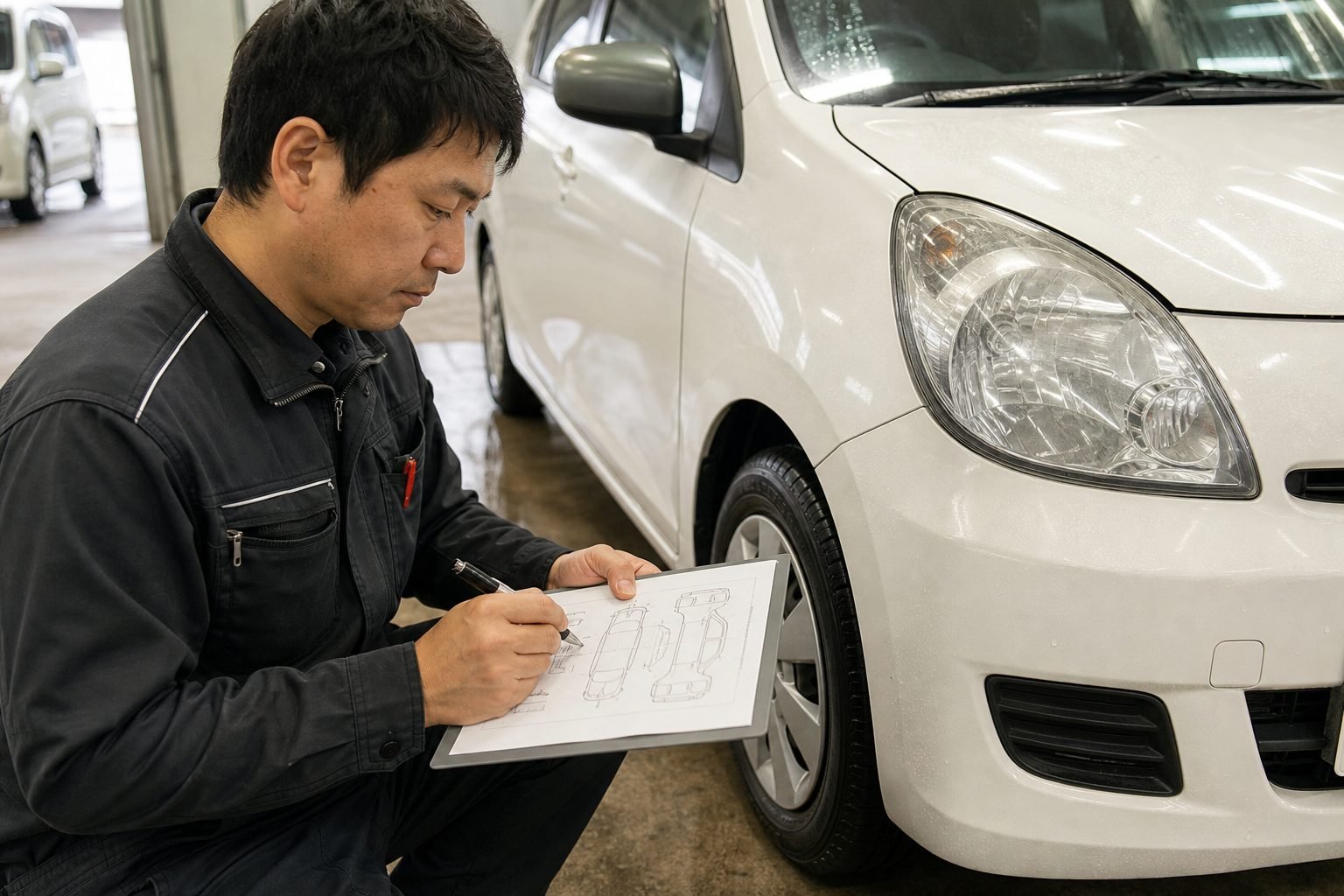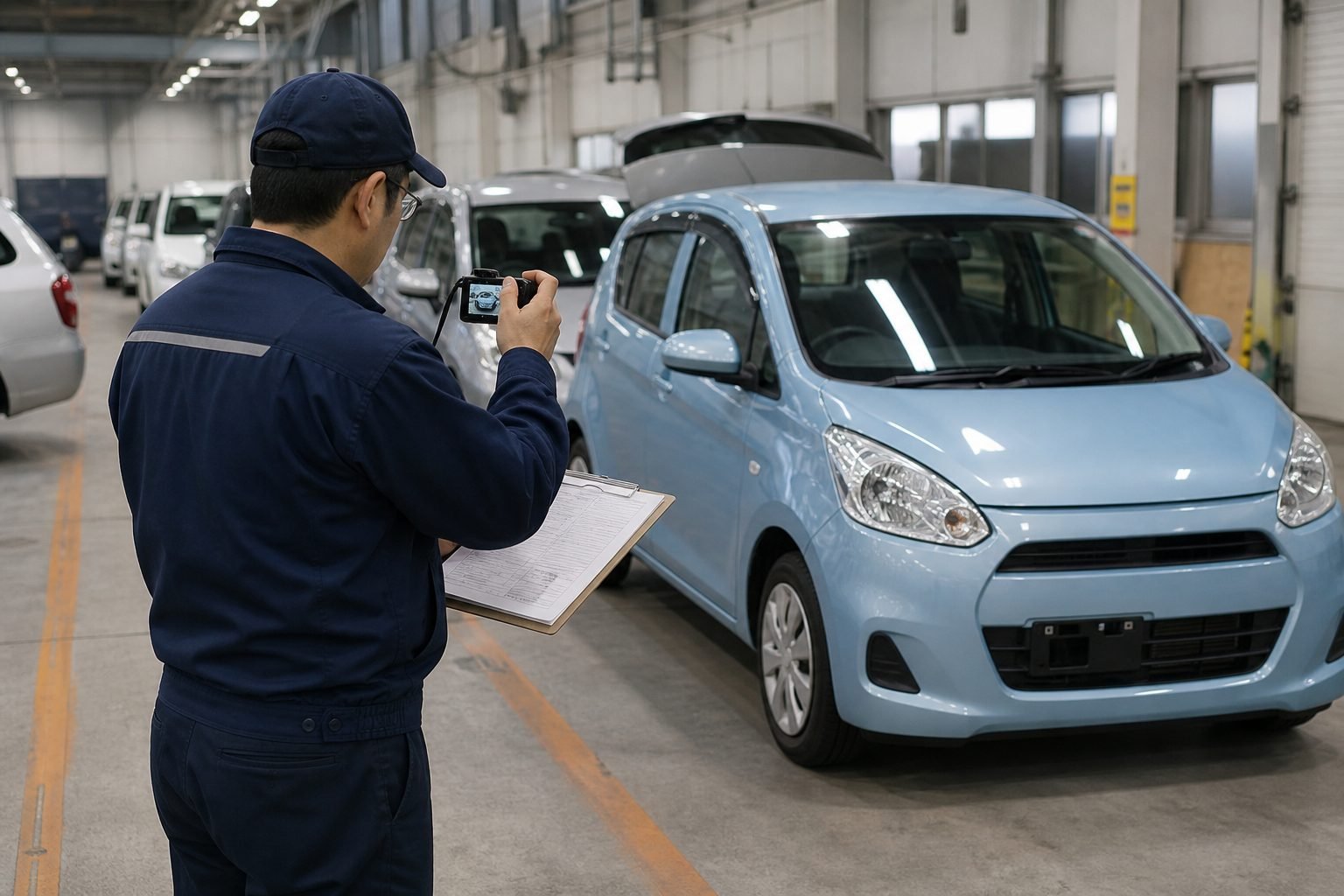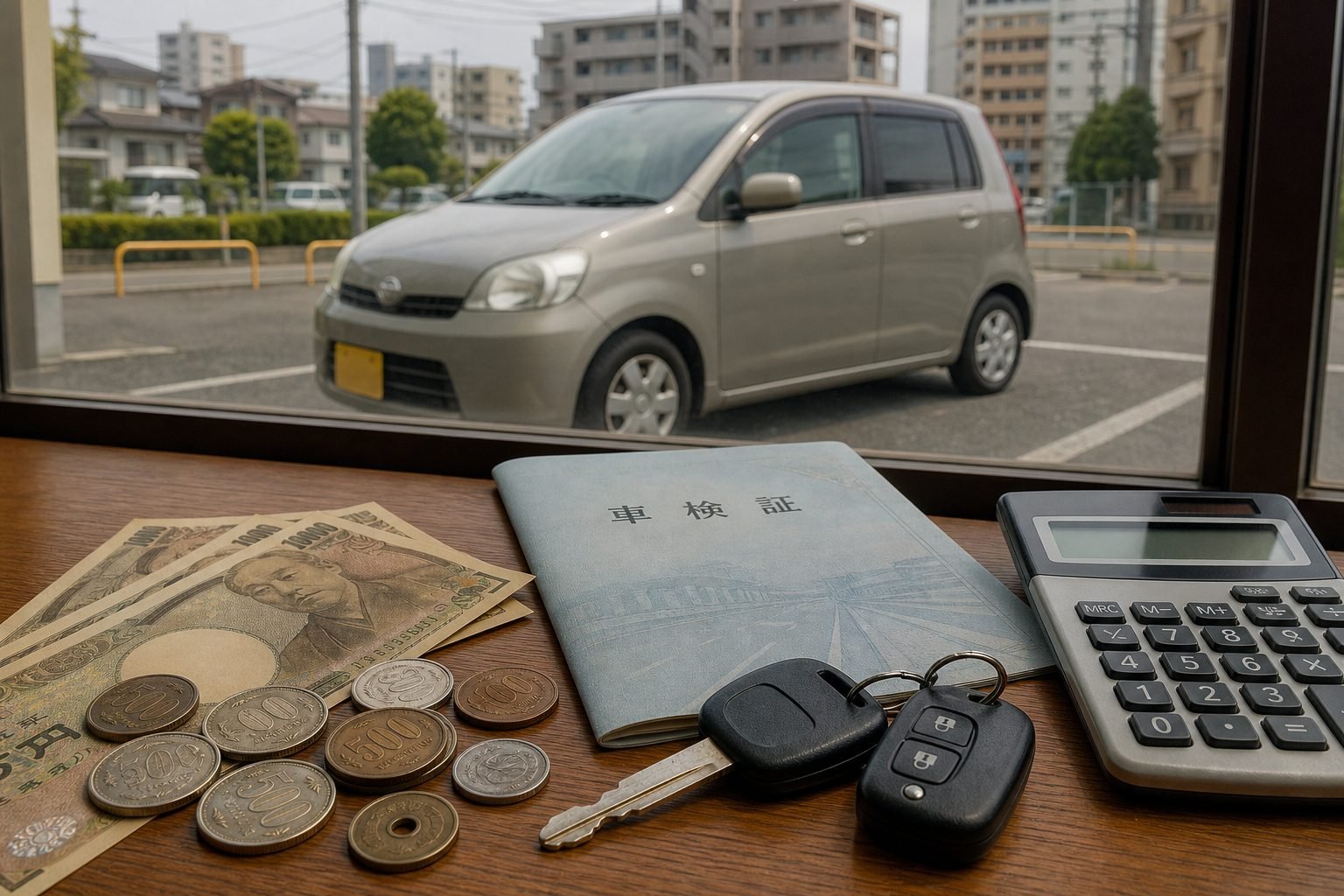
The auction or lot price is what people screenshot. The bill that surprises foreigners is everything else: automobile tax, shaken, mandatory 自賠責, optional insurance, parking, and fuel. Over a two-year tour those lines often exceed a “cheap” car’s sticker.
Figures below are order-of-magnitude yen ranges for a private used car, not a quote. Prefectures and shops differ. KMC JAPAN (Ogori, Fukuoka) can estimate a specific chassis. Buying steps: Fukuoka as a foreigner. Kei vs regular: which is better.
1. Purchase (one-off)
Usable kei cars often sit from a few hundred thousand yen to about ¥1,000,000. Compacts (Aqua, Fit) commonly run higher. Add:
- Consumption tax if the seller is a taxable dealer
- Recycle fee (often already paid on used cars — check the certificate)
- Name-change / number-plate fees at the transport office
- Delivery if you are in Sasebo or Kitakyushu
Ask for the 乗り出し (on-the-road) total, not the windshield number.
2. Automobile tax (毎年)
Billed once a year (typically May). Private kei is on the order of ¥10,000/year. Regular cars scale with engine size — a small 1.0–1.5 L compact is often roughly ¥25,000–¥40,000/year depending on year of first registration. Leave Japan without paying and the next owner (or you, if the name is still yours) inherits a mess.
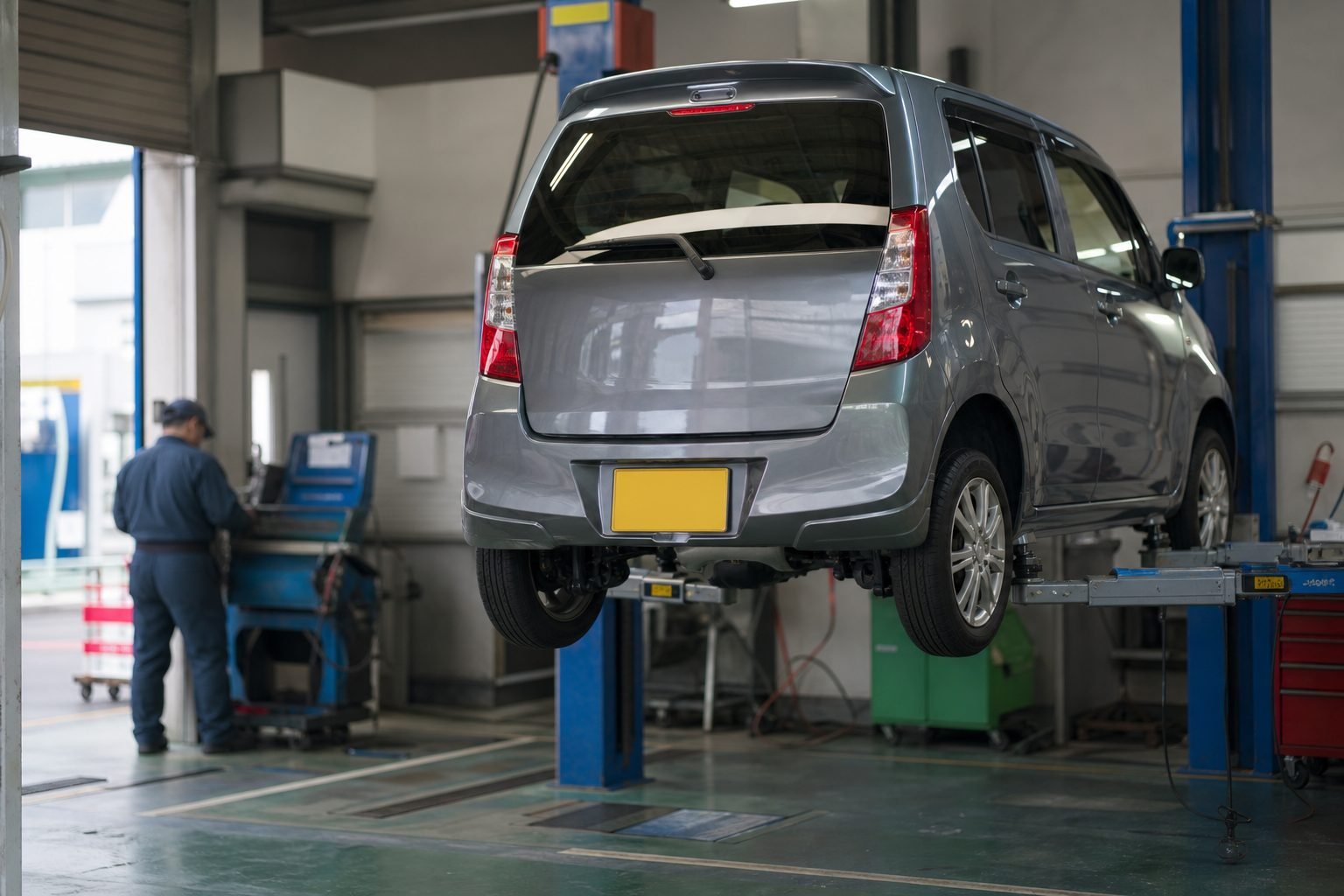
3. Shaken + 自賠責 (every 2 years for most private used cars)
User-owned cars usually inspect every two years. A “simple” kei shaken at a shop might land around ¥40,000–¥80,000 if nothing is worn. A regular compact with pads, tires, or rust can be ¥80,000–¥150,000+. That bundle includes weight tax and 自賠責 (compulsory liability).
Buying with 12+ months of shaken left is how you avoid a year-one shock. Model ideas: cheap used cars for foreigners.
4. Optional insurance (任意)
Compulsory 自賠責 does not cover your own car or most third-party damage you will actually care about. Voluntary cover for a foreigner with a clean record is often ¥40,000–¥120,000/year; young drivers and sports cars cost more. Get a quote before you bid.
5. Parking
If you own a house with a stall, cash cost can be ¥0 — you still need the parking certificate for most regular cars. City apartments in Fukuoka or Nagasaki might be ¥8,000–¥20,000/month. That line alone can dwarf kei tax. Forms: kmcjapan.org / 車庫証明 guide.
6. Fuel, tires, expressway
A hybrid Aqua in town can be far cheaper per km than an old 2.0 L wagon. Kei cars sip fuel at 40 km/h and feel thirsty on the Kyushu expressway. Budget winter tires if you drive inland; coastal Sasebo often needs less snow rubber than people expect.
Ballpark yearly “keep” (after you already bought the car)
| Kei, house parking | Compact regular, paid parking | |
|---|---|---|
| Tax | ≈ ¥11,000 | ≈ ¥30,000 |
| Shaken averaged per year | ≈ ¥25,000–¥40,000 | ≈ ¥40,000–¥75,000 |
| 任意 insurance | ≈ ¥50,000 | ≈ ¥70,000 |
| Parking | ¥0 | ≈ ¥120,000+ |
| Fuel (light use) | ≈ ¥60,000 | ≈ ¥70,000 |
| Rough total | ≈ ¥150,000–¥200,000 | ≈ ¥330,000–¥400,000+ |
Your numbers will move. The table is only to show why parking and shaken dominate — not a KMC price list.
When you leave
Unpaid tax and a car still in your name will follow you. Plan sale, export, transfer, or scrap: what to do with the car. Buyback: kmccar.com.
Ask for a cost estimate on a real car View inventory
Not tax, insurance, or legal advice. Confirm current fees with the tax office, transport branch, and your insurer.