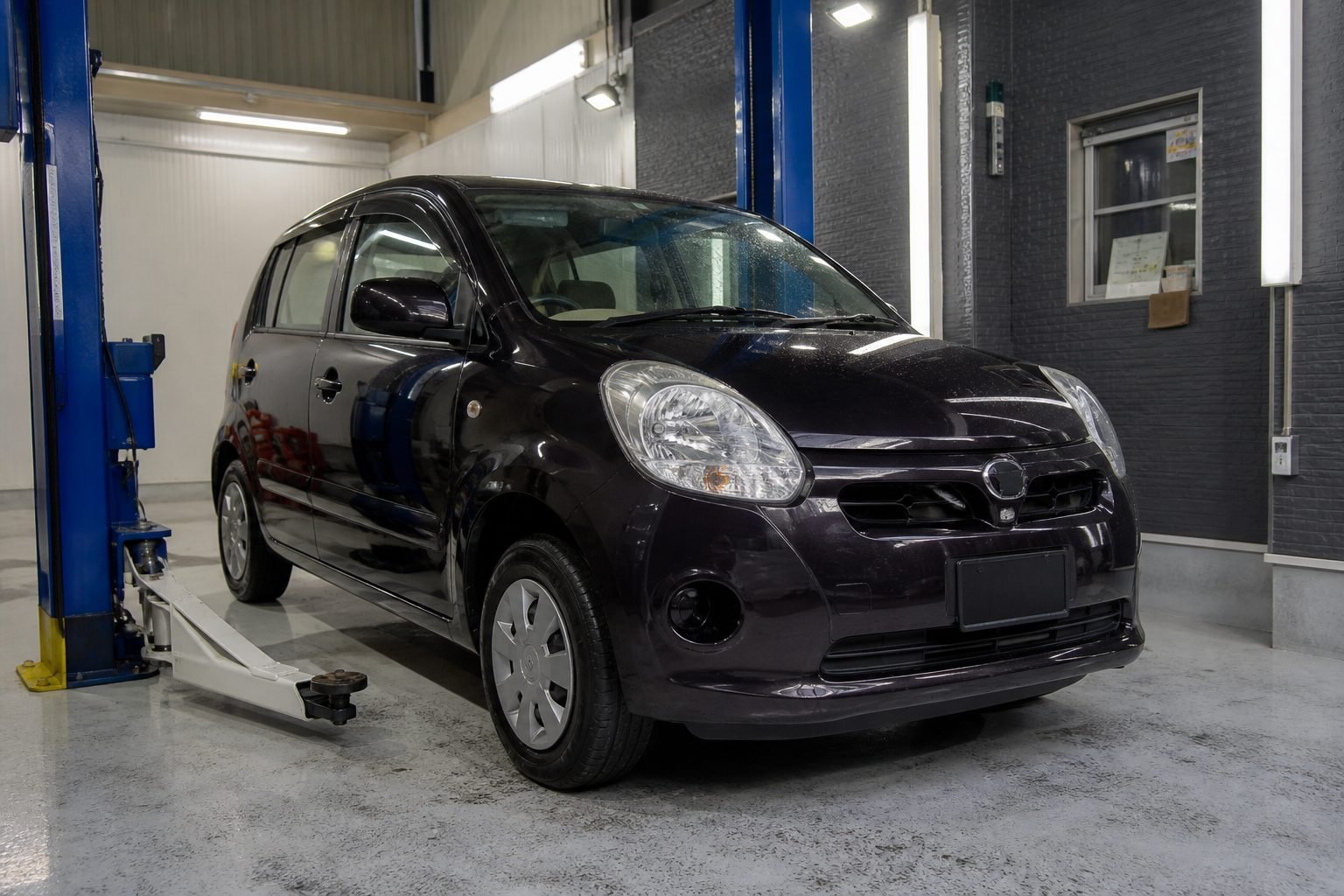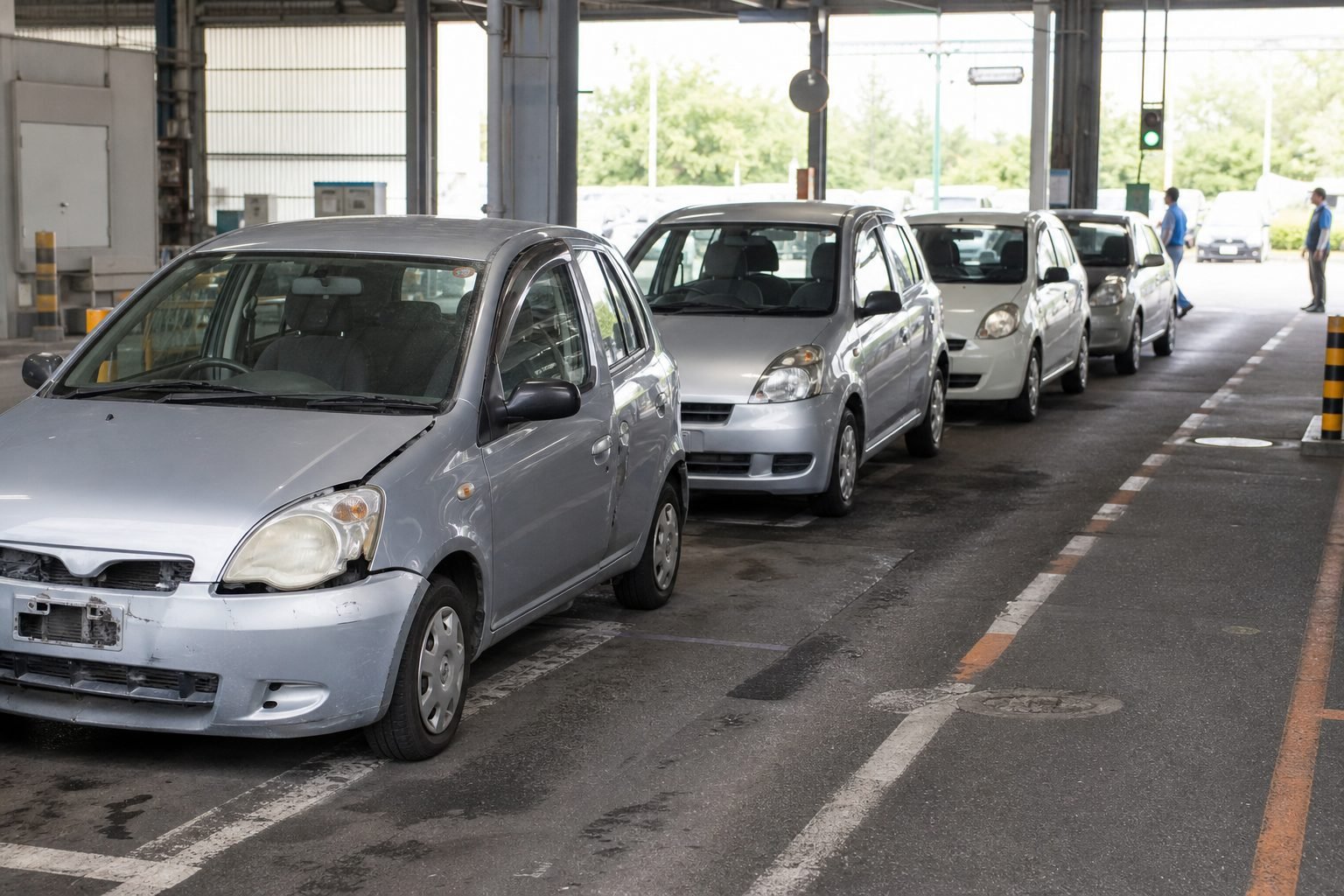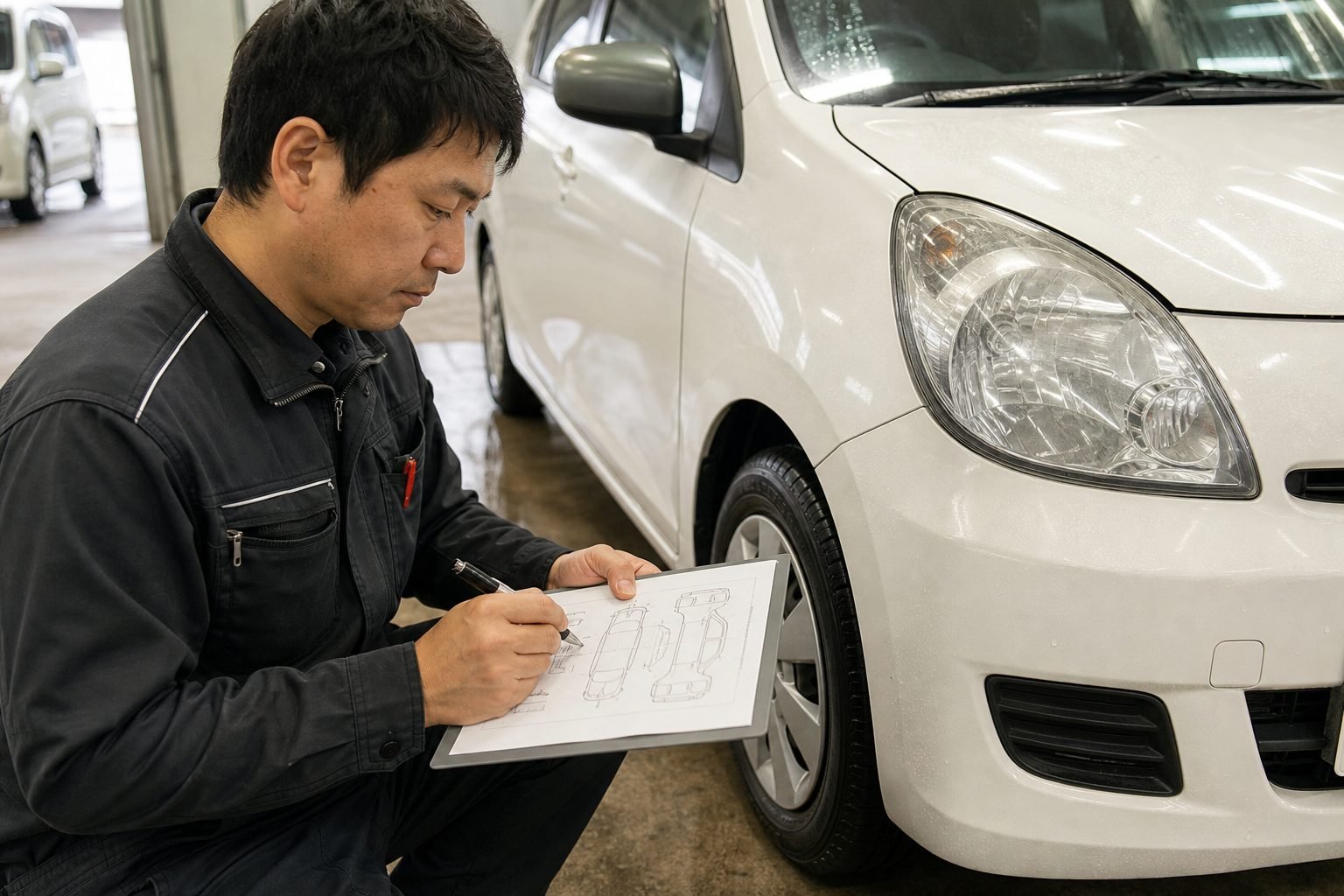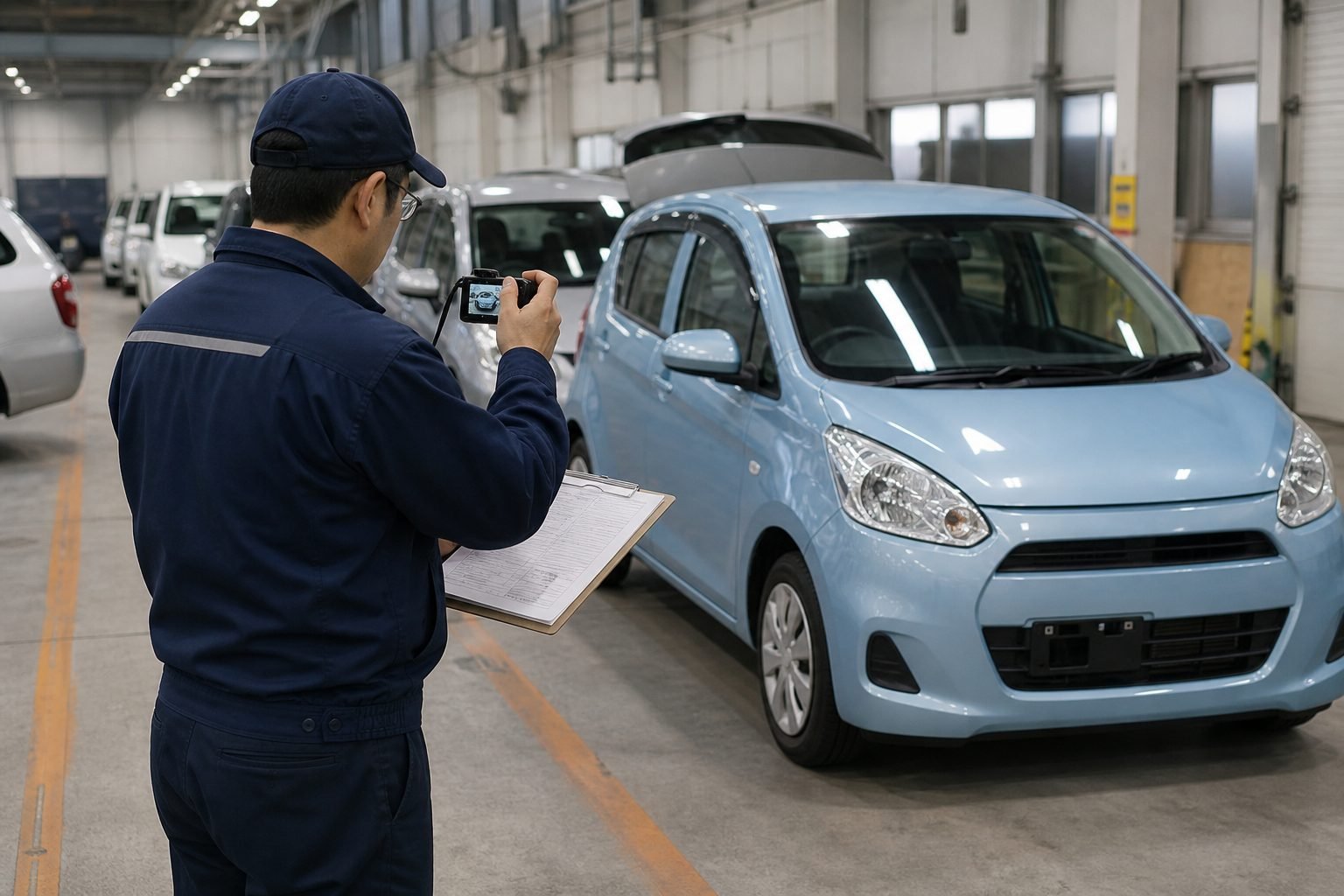
On a Japanese auto auction sheet, R and RA are not the same kind of mark as 4.5 or 4. Those numbers try to describe how the car looks and how it has been used. R / RA tell you the inspector recorded 修復歴 — repair history on the skeleton of the car (frame, pillars, rails, floor members, and similar parts the venue lists).
A clean-looking N-BOX can still be R. A scratched Aqua with no skeleton work can still be 3.5. That is why foreigners who bid from photos get surprised.
KMC JAPAN helps customers in Sasebo and across Kyushu find Japanese used cars, including affordable kei cars, compact cars, SUVs, minivans and hybrids. We sit in Ogori, Fukuoka and read auction sheets in English before you set a max bid. We are not the auction house; that venue’s current inspection rulebook wins if our summary and their sheet disagree.
Ask us to read a sheet Auction proxy bidding
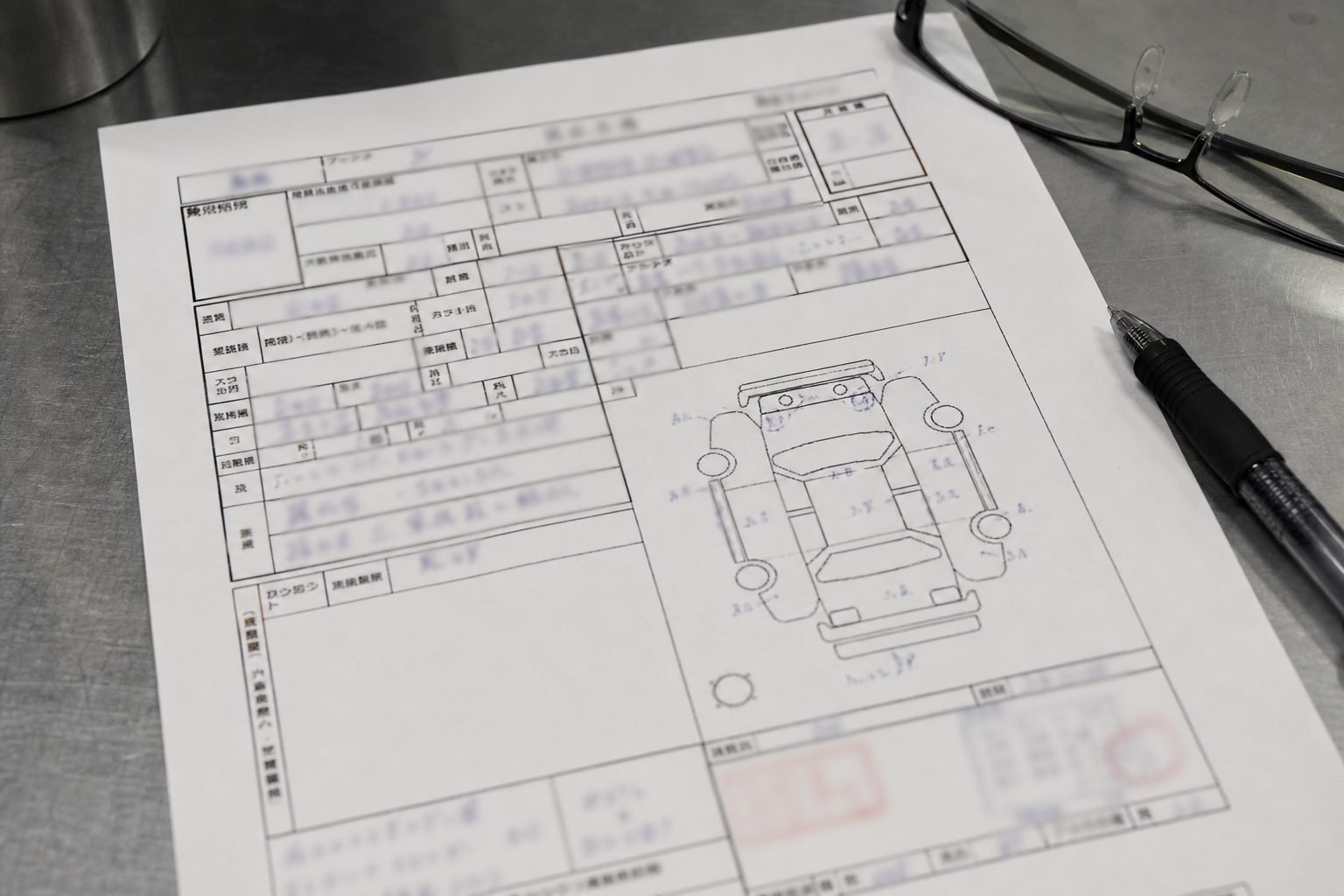
修復歴 is not “any accident”
Japanese auctions use a narrow idea of repair history. In plain English:
- Usually counts — cutting, welding, or correcting structural parts the venue treats as skeleton (inner panels, rails, pillars, roof, floor, etc., per that house’s list)
- Usually does not count by itself — bumper cover, outer door skin, fender, bonnet, or a parking-lot dent that was painted. Those show as キズ / 凹 / 交換 on the map, not automatically as R
A car can have been in a crash, look perfect, and still be R. Another car can look rough and have no 修復歴. Do not translate “accident” from English insurance language onto this sheet.
What R usually means
R (often spoken as “R-ten”) is a category, not a 1–6 beauty score. Interior and exterior can be excellent; if the inspector records skeleton repair, the overall box is still R at houses that work that way.
Typical implication: the hammer price is lower, some export buyers will not touch it, and you must tell the next owner. It does not automatically mean the car is unsafe to drive — and it does not automatically mean it is fine. You still read which part was repaired, how the comment is written, and remaining shaken.
What RA usually means
Many Japanese venues use RA (sometimes written R-A) for 修復歴 that they treat as lighter than a full R — for example a radiator / core support or a small correction at the end of a rear floor, depending on that house. Other venues only print R, or use different letters.
Treat RA as: still repair history, often milder on paper, never “no accident.” Do not bid RA as if it were a 4-point car with a typo.
What else sits next to R on the sheet
- S / 6 / 5 / 4.5 / 4 / 3.5 / 3… — condition-style grades when there is no 修復歴 in that house’s system
- *** or similar — often a car still damaged, or not given a normal grade; read the photos
- Interior / exterior letters (A, B, C…) — cabin and paint, separate from R
- Comment line — rust, leak, engine note, “corrected,” replaced parts. This is where cheap cars become expensive
USS, JU, TAA and smaller Kyushu halls do not share one universal legend. A 4 at one hall is not a 4 at another. We explain the sheet you actually have.
Should you buy R or RA?
- Japan daily driver — possible if the repair is documented, the price reflects it, and you accept resale will be harder. Shaken still has to pass.
- Export — some countries and some of your buyers reject 修復歴. Tell us the destination first. Hiding R on an invoice is how exporters lose clients; we will not do that.
- CFA Sasebo / short tour — a cheap R kei can still be the wrong car if you need a clean story at VRO or when you sell. See Sasebo VRO and cars under ¥500,000.
How we work a sheet in English
- Send the lot / sheet (or ask us to pull Kyushu auction stock)
- We say whether the box is a condition grade or R / RA, and what the marked panels mean
- You set a max bid only after a proxy agreement and deposit if we bid
- Optional history lookup: True Report (chassis / past auction appearances — not a substitute for the live sheet)
English desk: English-speaking car dealer in Japan. Kyushu buying: buy in Kyushu as a foreigner. Inventory: cars.php.
This is a buyer’s explanation, not the official USS/JU manual and not a guarantee of structural safety. Auction cars are sold as-is on the sheet; claim windows are short and follow the hall. Confirm the current inspection legend with us on the actual lot before you bid.