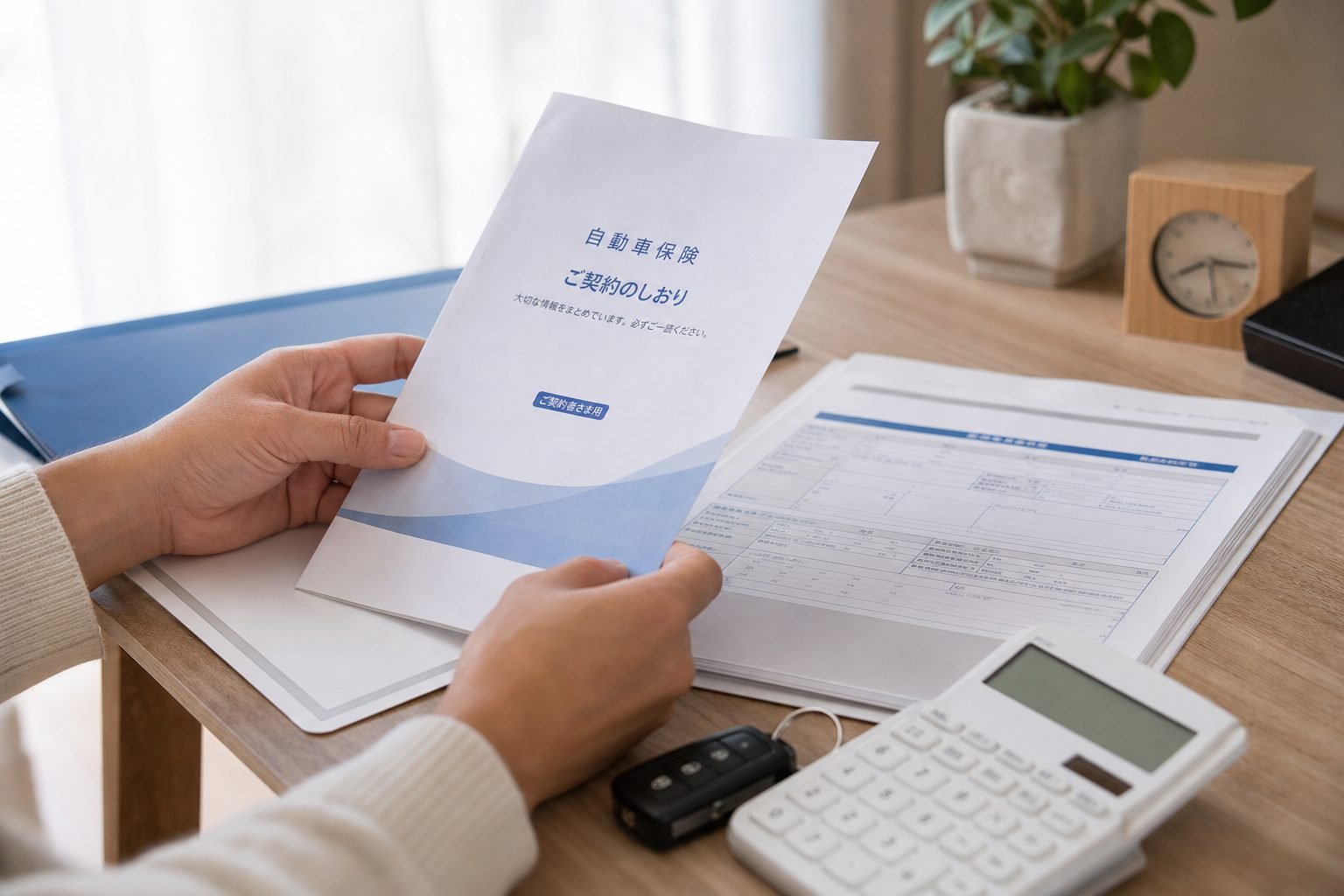
Japan has two layers of car insurance. Mixing them up is the usual foreigner mistake: people think the paper that comes with shaken is “full cover.” It is not.
- 自賠責 (jibaiseki) — compulsory liability. You need it to drive and to pass shaken.
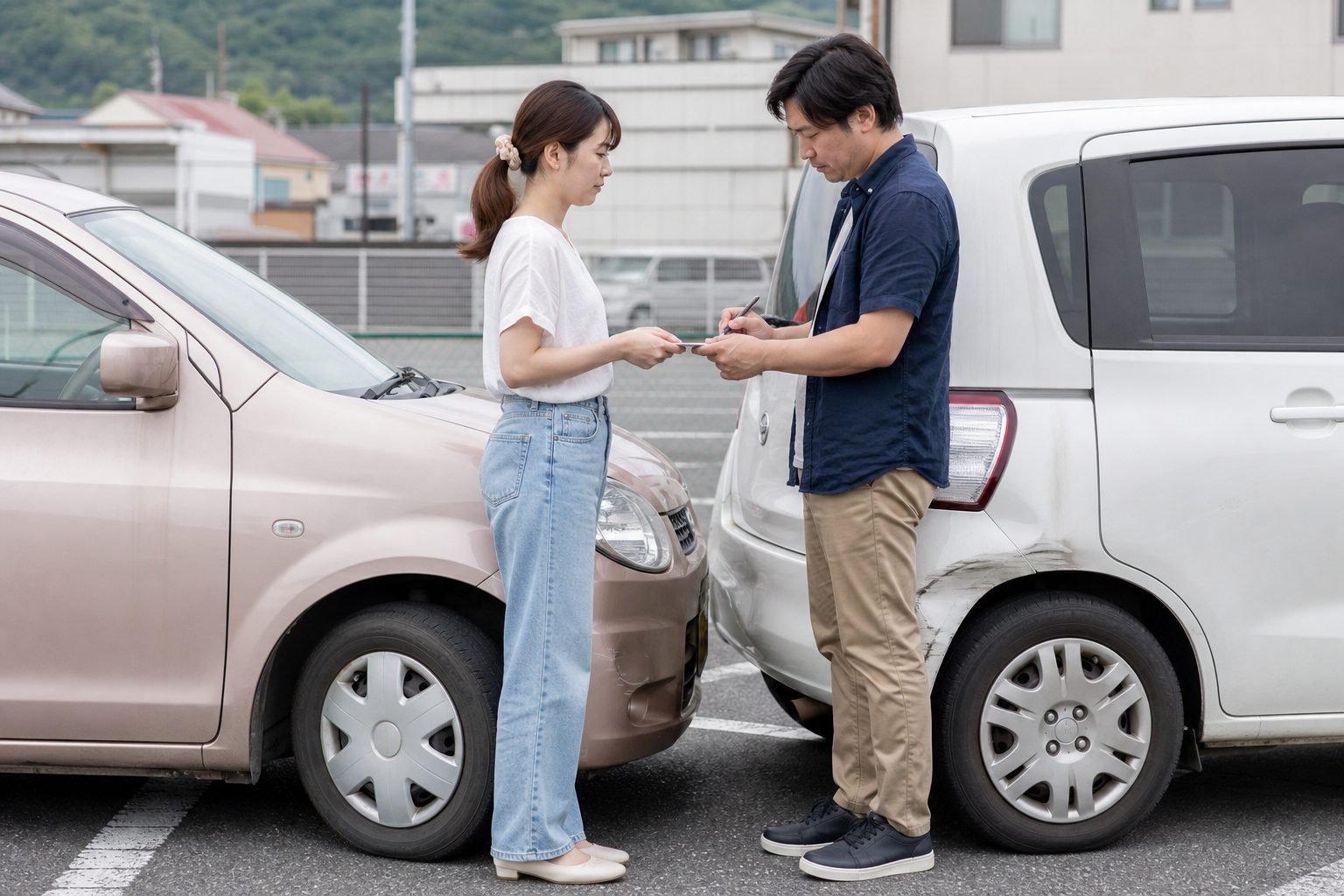
- 任意 (nin’i) — voluntary policy. This is what pays when you hit a parked car, injure someone beyond 自賠責 limits, or wreck your own used Fit.
KMC JAPAN sells cars and export services from Ogori, Fukuoka. We do not underwrite insurance. Get quotes from a Japanese insurer or a broker who handles foreign licenses. Buying context: buying in Fukuoka as a foreigner. Yearly cost ballpark: cost to own a car.
自賠責 — required, narrow
Compulsory cover is for bodily injury (and death) to other people, with legal maximums. It does not cover:
- The other person’s car, wall, or guardrail
- Your own car
- Your own injuries in many situations you would expect from a Western “full policy”
Premiums are set in bands (kei vs regular, 12 vs 24 months) and are usually paid as part of shaken. Driving without 自賠責 is a crime, not a paperwork nicety.
任意 — the policy you actually want
A typical voluntary package is built from:
- Bodily injury liability — often “unlimited” on Japanese family policies
- Property damage liability — other cars, fences, shop fronts
- Personal injury / passengers
- Vehicle insurance (車両) — optional; skip it on a ¥200,000 kei if the premium is silly, keep it on a newish Aqua
- Lawyer / attorney costs and roadside assistance — cheap and useful if your Japanese is weak
Insurers rate you on license type, age, accidents, and sometimes how long you have lived in Japan. A Japanese license is easier to quote than a foreign license + JAF translation. Ask before you pay a deposit on a car.
Kei vs regular
自賠責 and some 任意 rates are lower for 軽自動車. That is one reason kei cars stay cheap to own — see kei vs regular. A clean compact hybrid can still be inexpensive if you have a Japanese license and a safe record.
SOFA / base
If you register through a US base PMV office, you follow that office’s insurance list, not this civilian 車検証 path. We are not a Navy vendor. Confirm with your command.
When you buy the car
- Check shaken expiry — 自賠責 is usually aligned with it
- Start 任意 the day you drive, not “next week”
- Name the policy to match the 車検証 as the insurer requires
- Keep the 任意 card in the glove box; police and the other driver will ask
When you leave Japan
Cancel 任意; some companies refund unused months. Remaining 自賠責 often stays with the car or is settled at name change / export / scrap. Do not leave a policy (or a car) in your name after PCS: sell, export, transfer, or scrap.
Questions about a specific car View inventory
This is a practical explainer, not insurance, legal, or tax advice. Policy wording wins over this article.