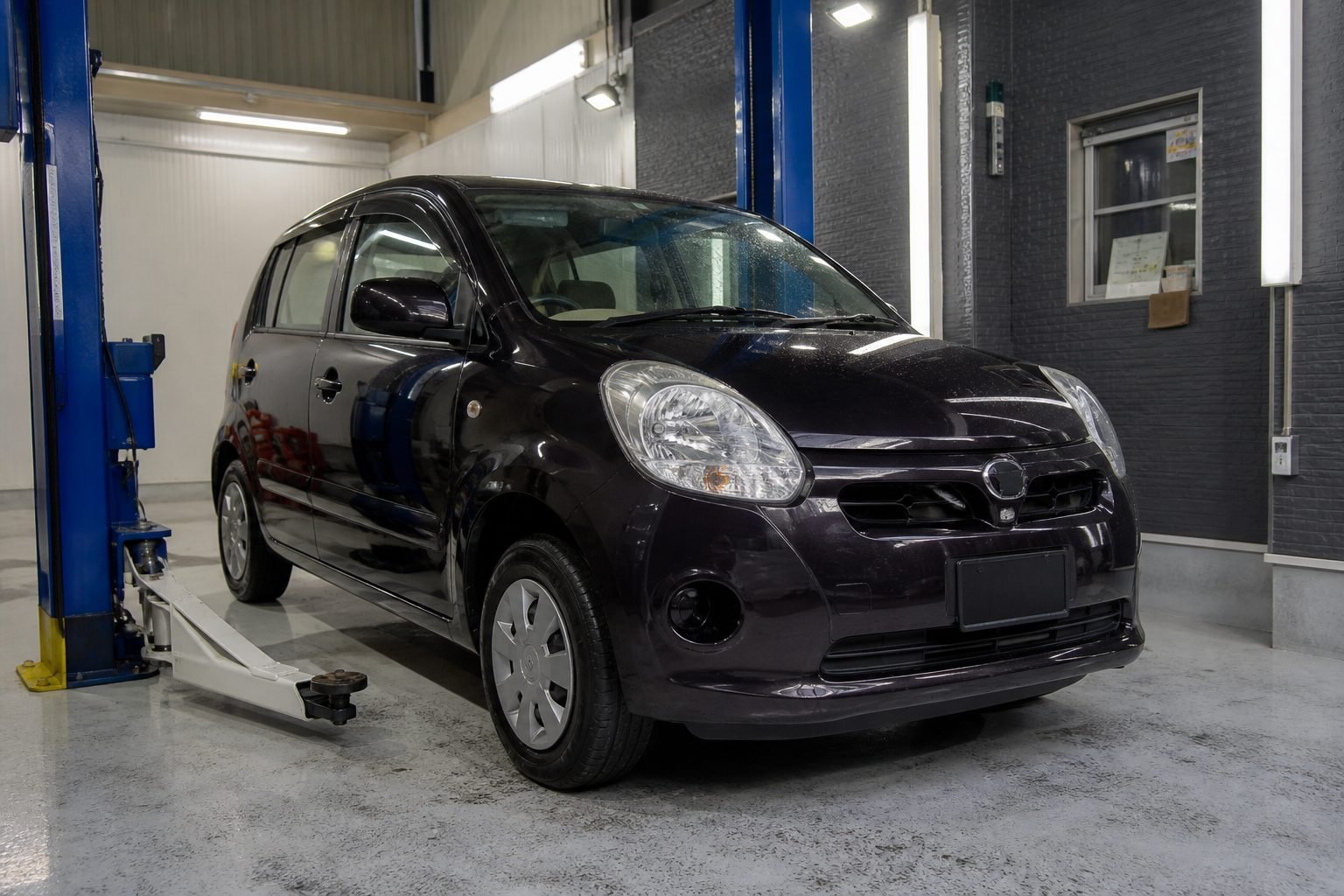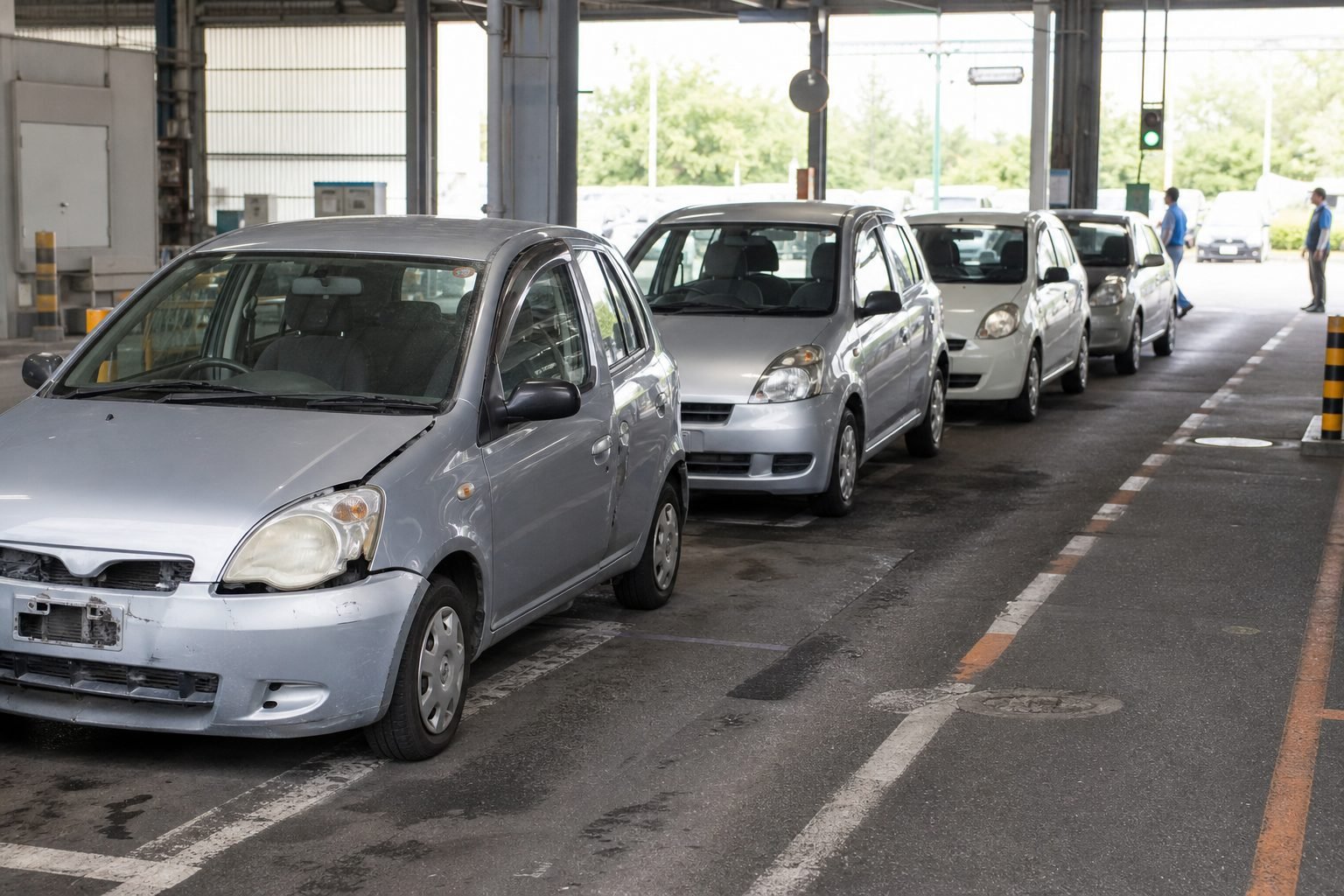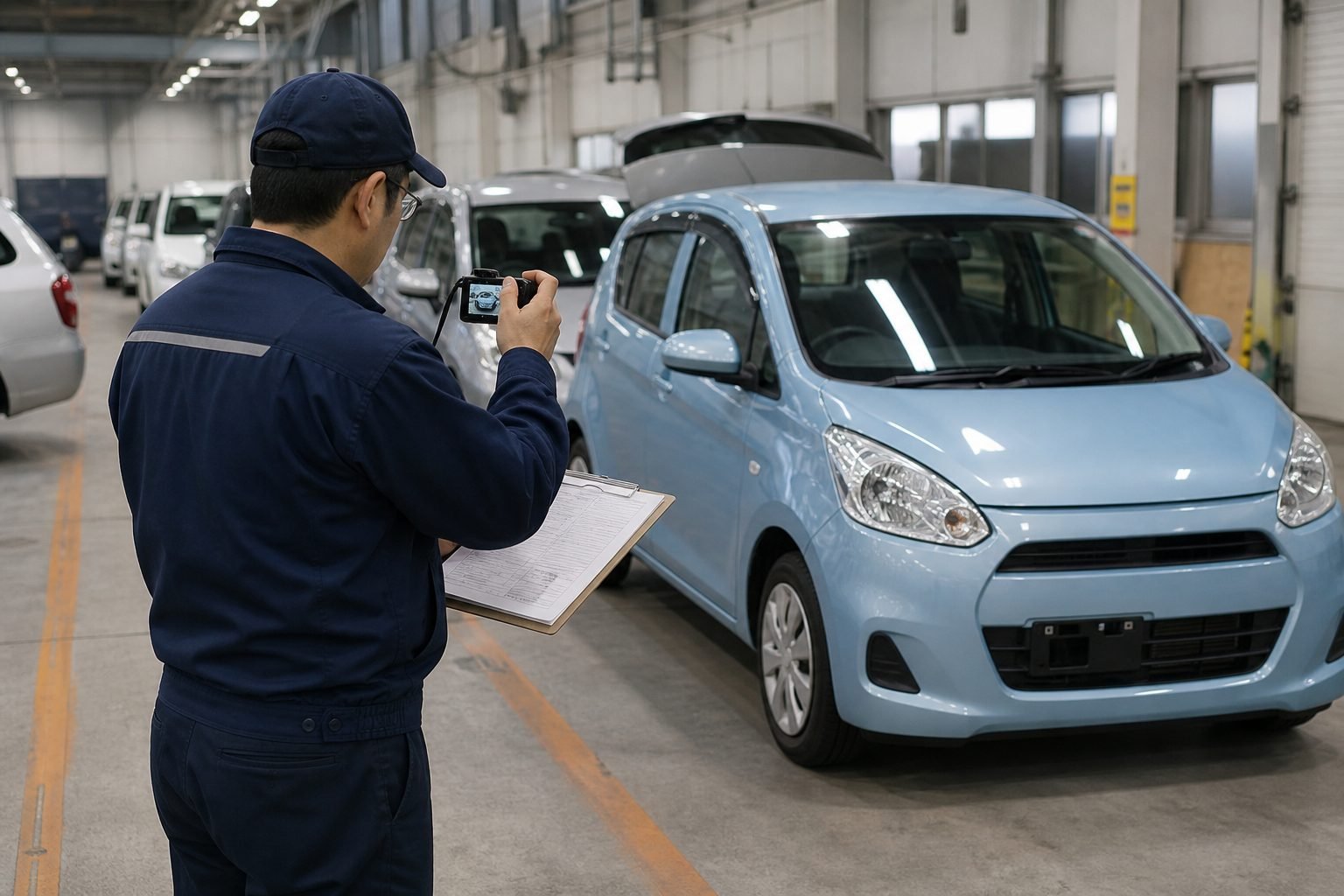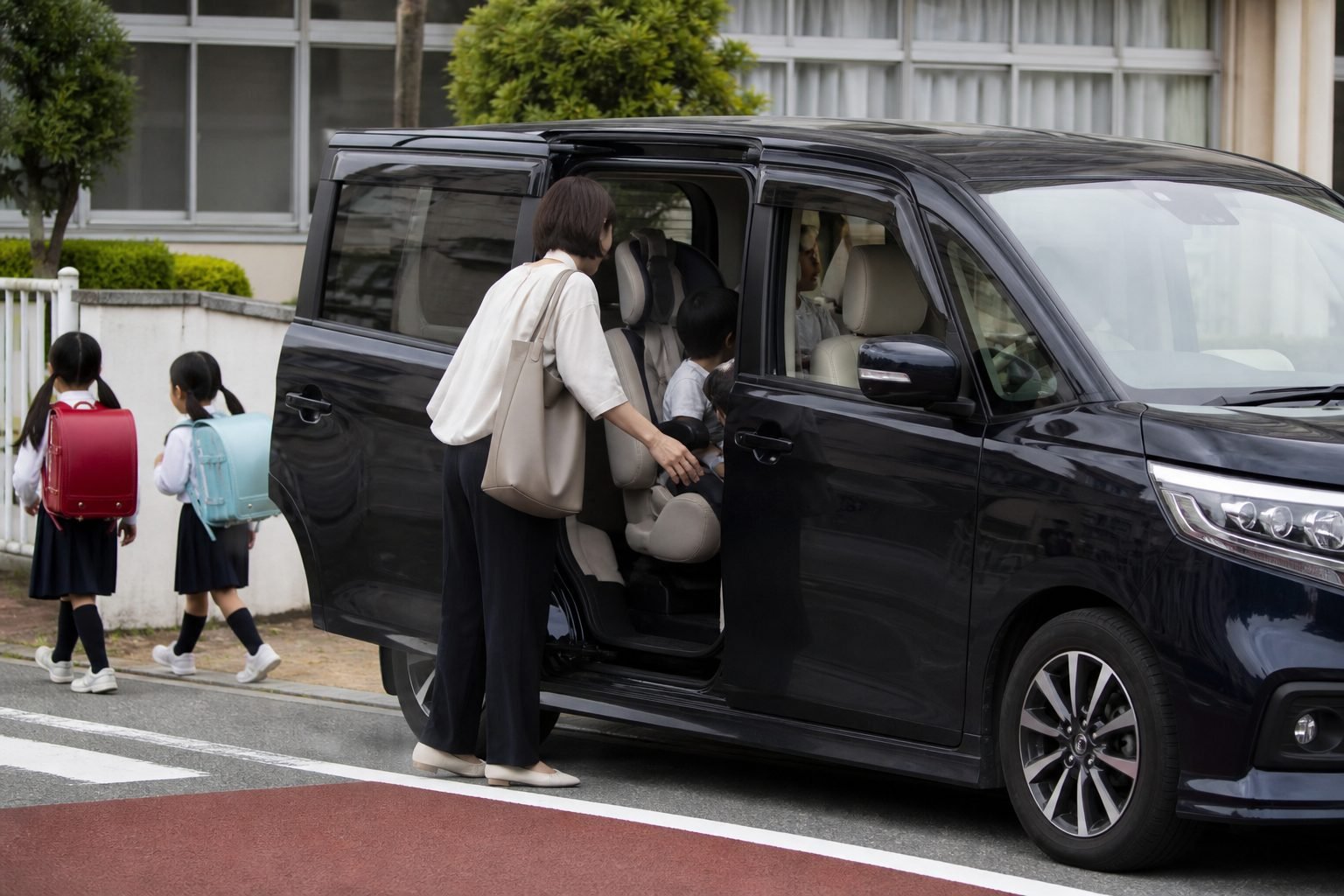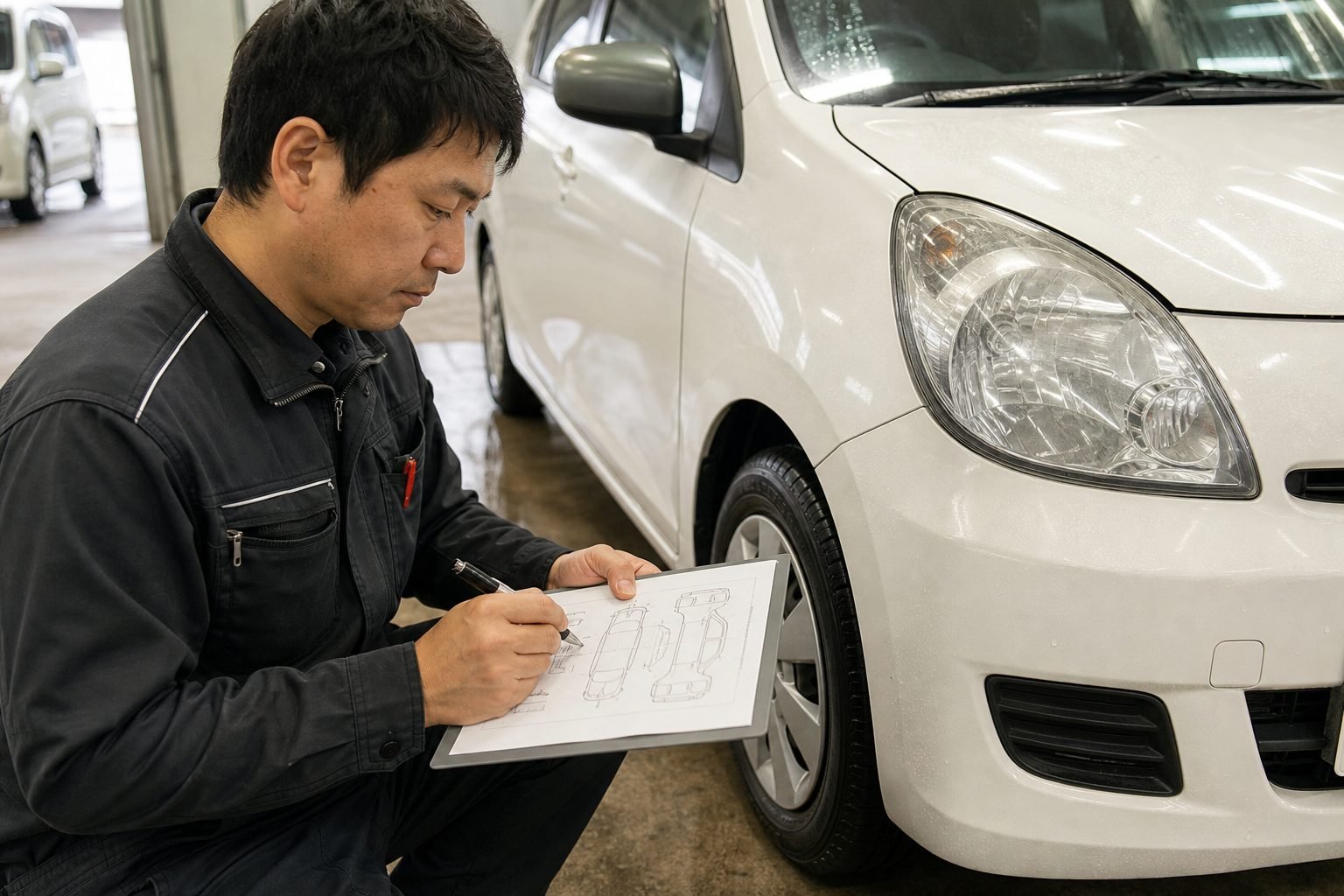
A Japanese auction sheet is a one-pass inspection map, not a Western CARFAX and not a mechanic’s guarantee. Inspectors tick panels, write a comment, and drop an overall box (4.5, R, ***). Foreigners get scammed when they treat a pretty photo as the sheet, or treat the sheet as a warranty: buy without getting scammed.
USS, JU, TAA and smaller Kyushu halls do not share one alphabet. Some maps use Japanese (キズ, 凹, 交換). Some use A / U / W plus a size number. The PDF on that day’s hall site beats this article. We read the lot you actually have.
KMC JAPAN helps customers in Sasebo and across Kyushu find Japanese used cars, including affordable kei cars, compact cars, SUVs, minivans and hybrids. English sheet walkthroughs from Ogori, Fukuoka. Structural grades have their own page: R, RA and 修復歴.
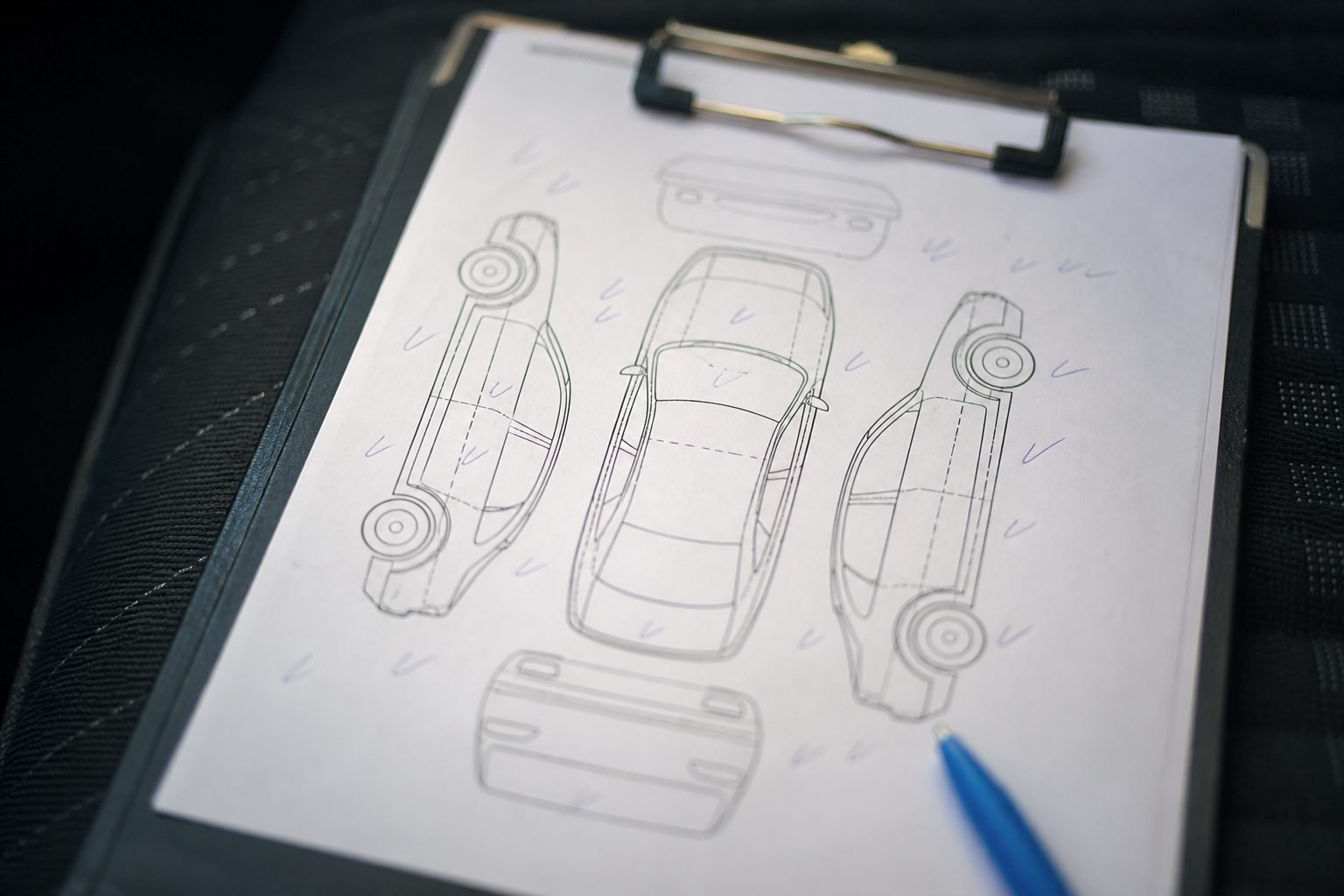
The three layers on every sheet
- Overall grade — S, 6, 5, 4.5, 4, 3.5, 3… or R / RA / *** (not a 1–10 “nice car” score when it is R)
- Interior / exterior letters — often A–E style cabin and paint, separate from 修復歴
- Panel map + comment — where foreigners should actually look
A 4.5 with a long comment about a leak is not a 4.5 in real life. A 3.5 with honest small キズ can be the better buy.
Panel marks you will see (common, not universal)
Many halls mix Japanese words and Latin letters. Treat this as a field guide.
| Often written | Usually means |
|---|---|
| キズ / A (+ size) | Scratch on paint or plastic |
| 凹 / U (+ size) | Dent |
| 波 / B | Wave, poor panel finish, or a paint repair the inspector can feel |
| 交換 / W | Panel or part replaced (not automatically 修復歴) |
| 要修正 / 要塗装 | Needs correction or paint in the inspector’s view |
| サビ / 錆 / S | Rust — coastal Kyushu cars: look twice |
| 腐食 / C | Corrosion, worse than surface rust |
| ヒビ / 割れ / X | Crack (glass, lens, bumper, sometimes body) |
| P | Paint fade, peel, or paintwork — read the hall key |
| 石 | Stone chips (bonnet, bumper) |
Size numbers (1, 2, 3…) are that house’s millimetre bands. An A1 at one hall is not an A1 at another. Photos on the lot still matter.
交換 on a bumper or door skin is usually not R. 修復歴 is skeleton work — pillars, rails, floor, roof as that venue defines it. Do not translate every 交換 as “accident car,” and do not ignore R because the paint is new.
Overall box (very short)
- S / 6 / 5 / 4.5 — newer or cleaner examples; still read rust and options
- 4 / 3.5 / 3 — normal used; comments decide if it is cheap or radioactive
- R / RA — repair history category, not a beauty score — full R/RA guide
- *** / 現状 — often damaged now, or not graded; photos first
- 0 / 1 at some halls — disaster, heavy modify, or little commercial value — do not bid from the thumbnail
Interior / exterior letters
A high interior A with a smoked cabin and a torn slide-door on an N-BOX is a reminder: letters are one inspector’s afternoon. Family vans: check third-row photos anyway — family cars.
The comment line (do not skip)
This is where meters, leaks, engine notes, “corrected,” flood smell, and “not testable” live. If you cannot read it, you are not ready to set a max bid. We translate it before proxy bidding. Optional past appearances: True Report (not a substitute for the live sheet).
How we use this at KMC JAPAN
- You send lot / sheet or we pull Kyushu stock
- We say overall box vs map vs comment in English
- You cap the bid only after the export or Japan-use contract and deposit
- After a win, fees are invoiced — not a mystery FOB: FOB vs CIF vs CNF, ¥300,000 hammer
English desk: English-speaking dealer in Japan. Auction cars are as-is on the sheet; claim windows follow the hall. This is not the official USS/JU manual.