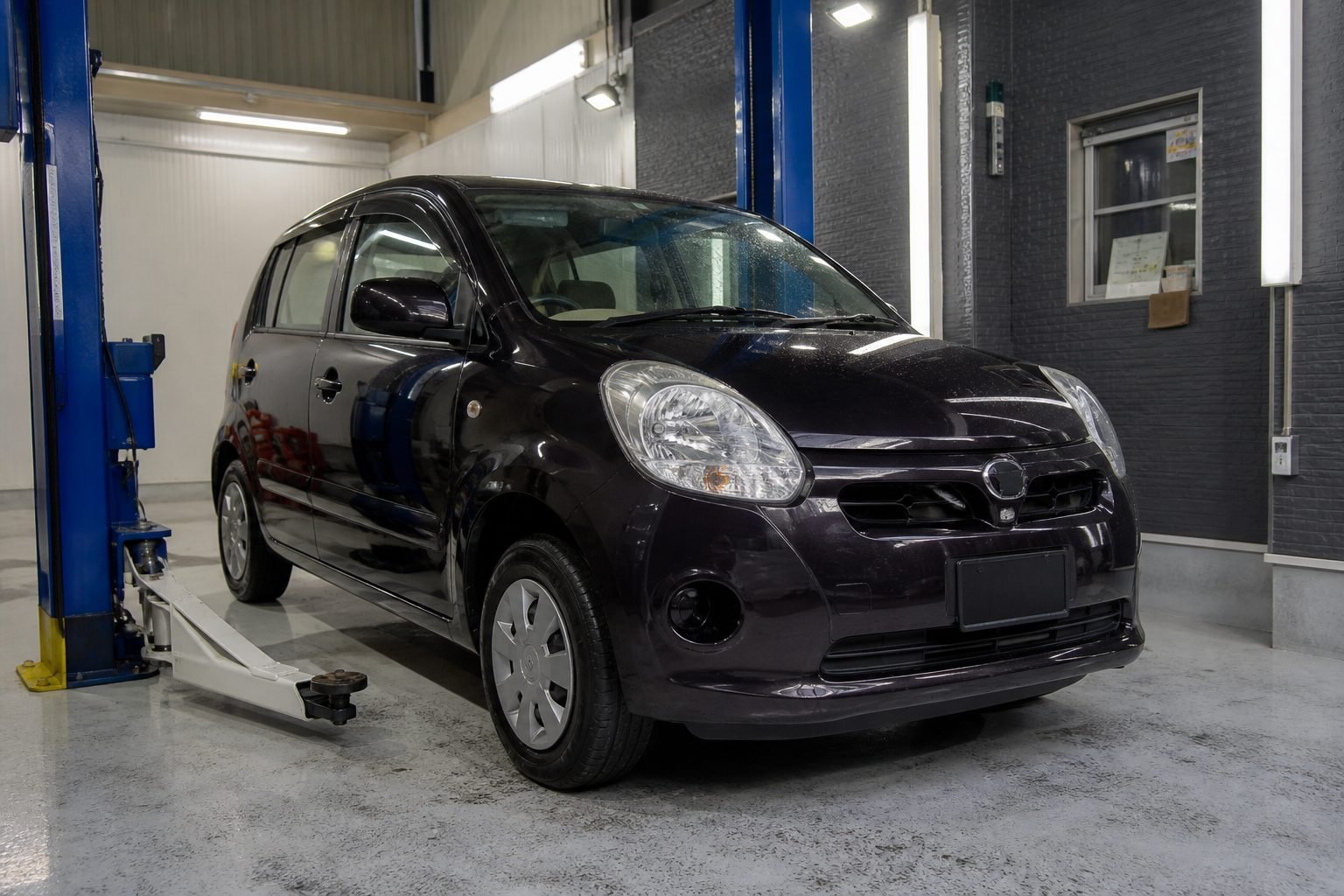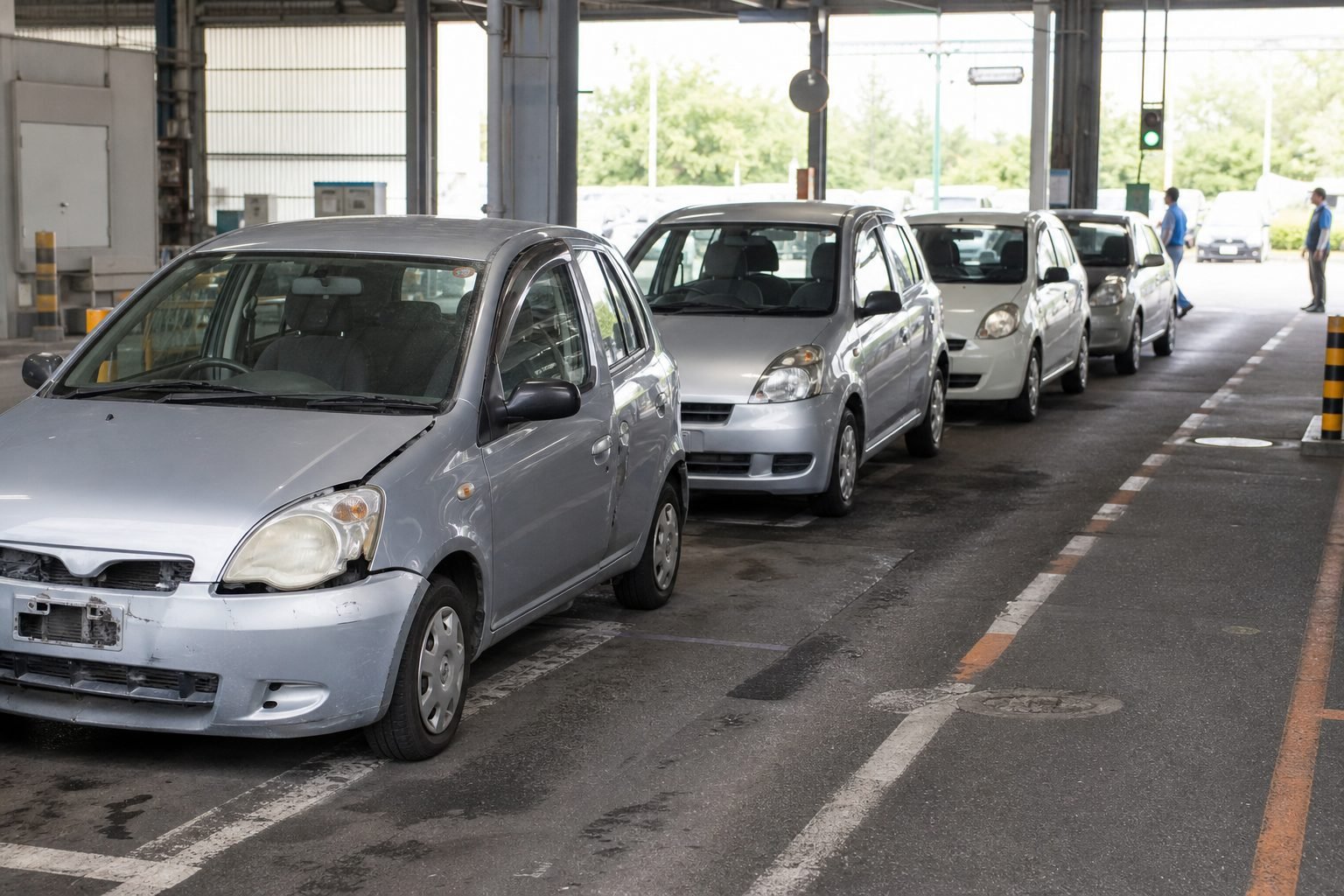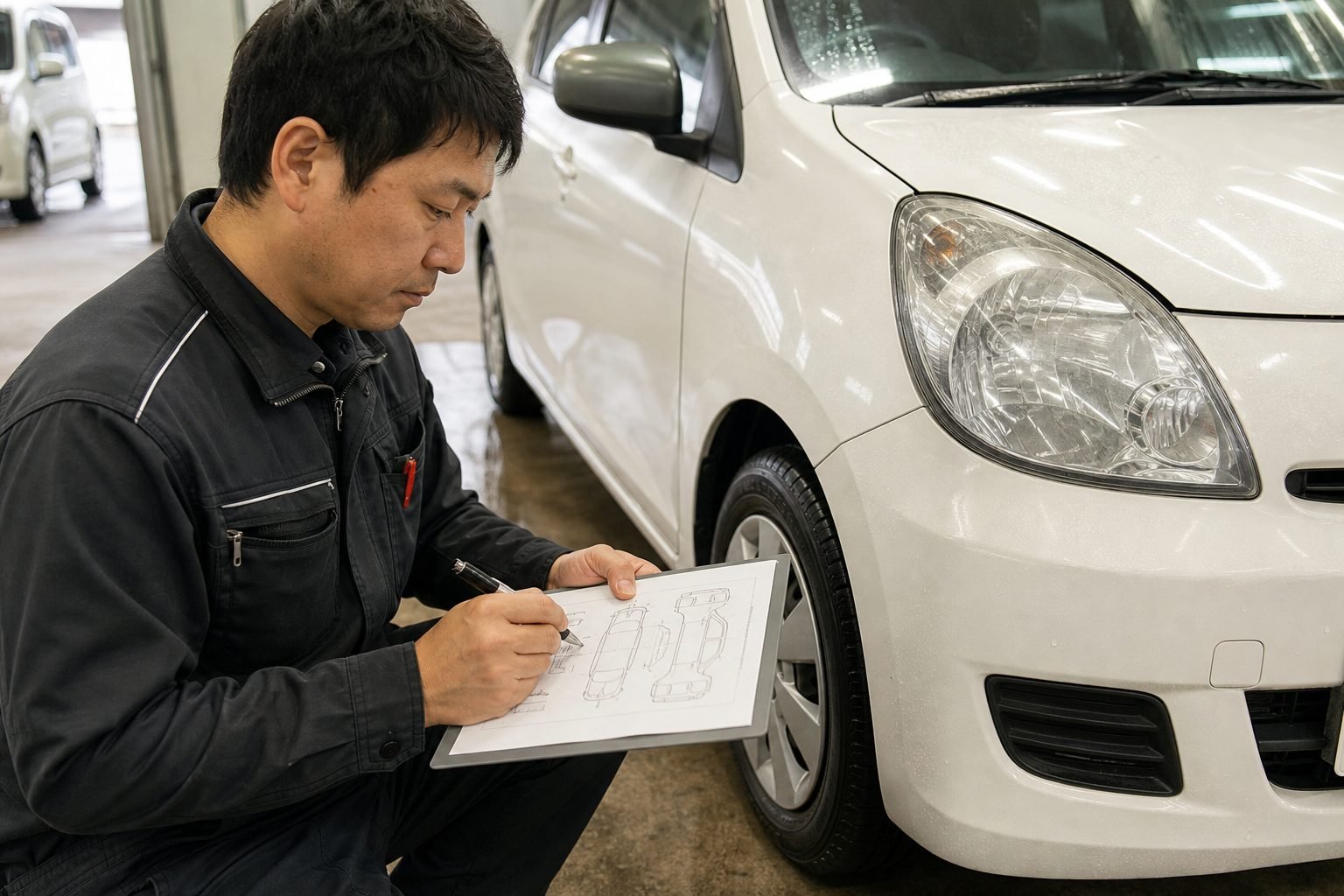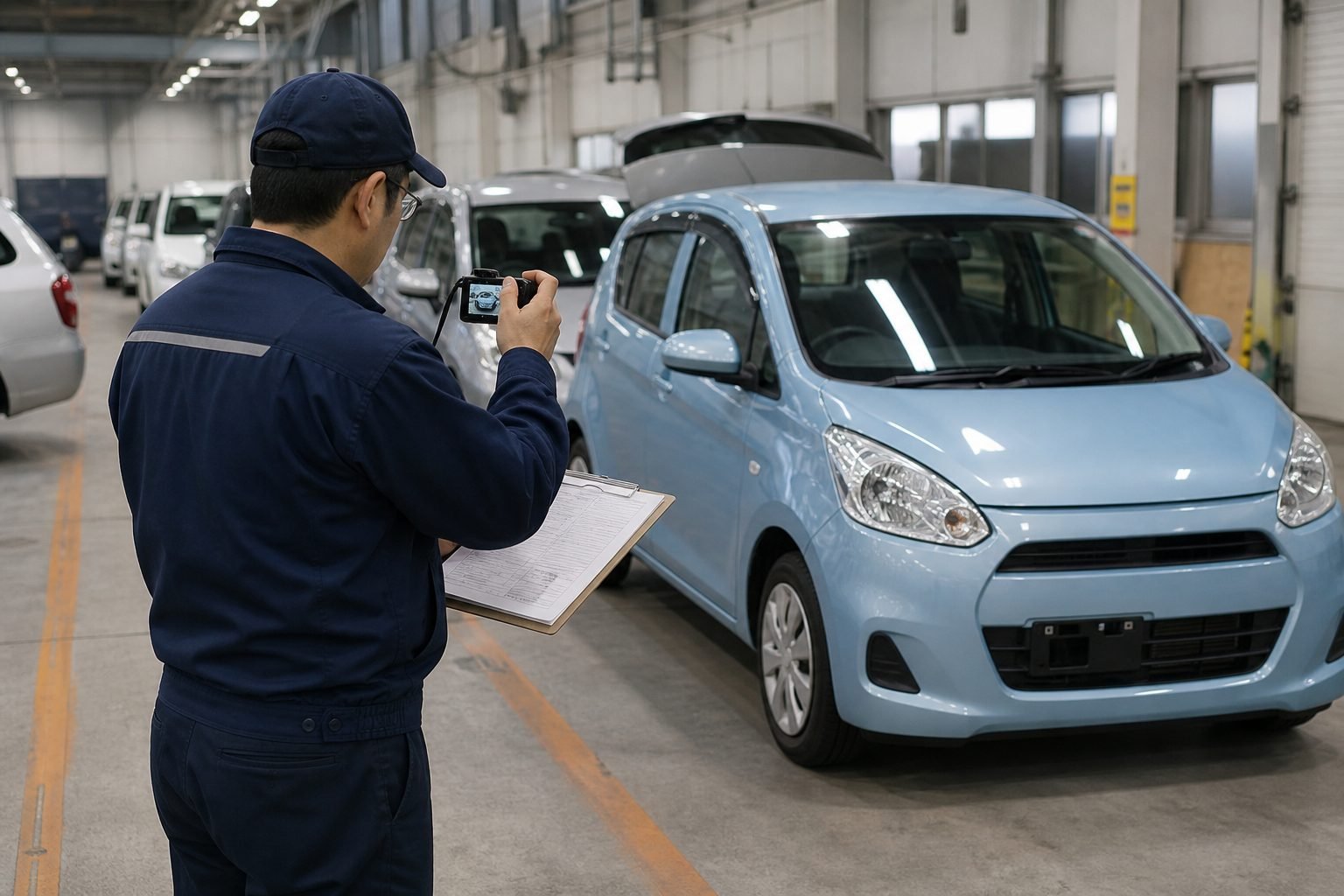
If you only remember one sentence: 自賠責 is compulsory and thin; 任意 is the policy that pays for the other car, the wall, the lawyer, and often your own kei. A shaken shop will sell you 自賠責 because the car cannot pass inspection without it. That paper is not “full insurance.”
A shorter primer already lives here: Japanese car insurance explained for foreigners. This page is the complete civilian checklist — documents, licenses, 2026 自賠責 bands, 任意 building blocks, base vs 車検証, and leaving Japan.
KMC JAPAN helps customers in Sasebo and across Kyushu find Japanese used cars, including affordable kei cars, compact cars, SUVs, minivans and hybrids. We work from Ogori, Fukuoka. We do not underwrite or sell insurance. Quotes come from a Japanese insurer, JA, a dealer desk, or a broker who will actually bind a foreign license. Policy wording and the Financial Services Agency tables beat this article.
Questions about a car (not a policy) View inventory
1. The two layers (do not mix them)
| 自賠責 (compulsory) | 任意 (voluntary) | |
|---|---|---|
| Required to drive / pass shaken? | Yes | No — but you are uninsured for property and most real claims without it |
| Pays the other person’s injuries? | Yes, up to legal caps | Yes, typically much higher / unlimited 対人 |
| Pays the other car, fence, shop? | No | Yes, if you bought 対物 |
| Pays your own car? | No | Only if you bought 車両 |
| Where you buy it | Shaken shop, insurer, some posts | Insurer / JA / broker / some dealers |
Driving without 自賠責 is a criminal and administrative problem, not a “fine later.” Driving with only 自賠責 and hitting a parked Aqua is a property claim 自賠責 will not touch.
2. 自賠責 in 2026 (mainland, typical private 24 months)
Premiums are national bands, not a negotiation. They are usually collected at shaken for the next inspection period. Policies whose period starts on or after 1 November 2026 use the revised (higher) table. Okinawa and some islands differ.
- Private passenger — about ¥17,650 (start through 31 Oct 2026) → about ¥18,560 (from 1 Nov 2026)
- Kei (検査対象) — about ¥17,540 → about ¥18,660
Full shaken stack (重量税 + stamps + shop): shaken cost in Japan 2026. Confirm the term (24 vs 25 months) on the quote so the policy does not expire before the sticker.
3. How 任意 is built
Ask for these names in Japanese so the clerk is not guessing:
- 対人賠償 — injury/death to others; family policies often “unlimited”
- 対物賠償 — other people’s property; set the limit high (a train or shop front is not a kei bumper)
- 人身傷害 / 搭乗者 — you and passengers, medical and related costs per that wording
- 車両 — your car. Skip or take a high deductible on a ¥300,000 auction kei; keep it on a late Aqua or minivan you cannot replace
- 弁護士特約 — attorney costs after an accident; useful if your Japanese is weak
- ロードサービス — tow and battery; not a substitute for 対物
等級 (nontsuki grade) is a no-claims ladder Japanese customers bring from a previous 任意 policy. Newcomers with no Japanese 任意 history usually start at a beginner grade, which is why the first-year quote can look rude next to a neighbour’s. Do not invent a 20-grade CV; the insurer will check.
4. Licenses insurers actually accept
You may be legal to drive on a foreign license plus translation (or an IDP, depending on your country and stay) and still be hard to insure.
- Japanese license — easiest quotes, including online forms
- Foreign license + JAF (or designated) Japanese translation — some companies will bind; many will not, or will only via a desk that handles foreigners
- International driving permit — a driving document, not a promise of 任意. Ask the insurer before you collect the car
Age bands (under 26 / 30, etc.), commuting vs pleasure, and annual kilometres all change the price. Get a quote before you pay an auction deposit if your only license is foreign.
5. Documents to have on the call
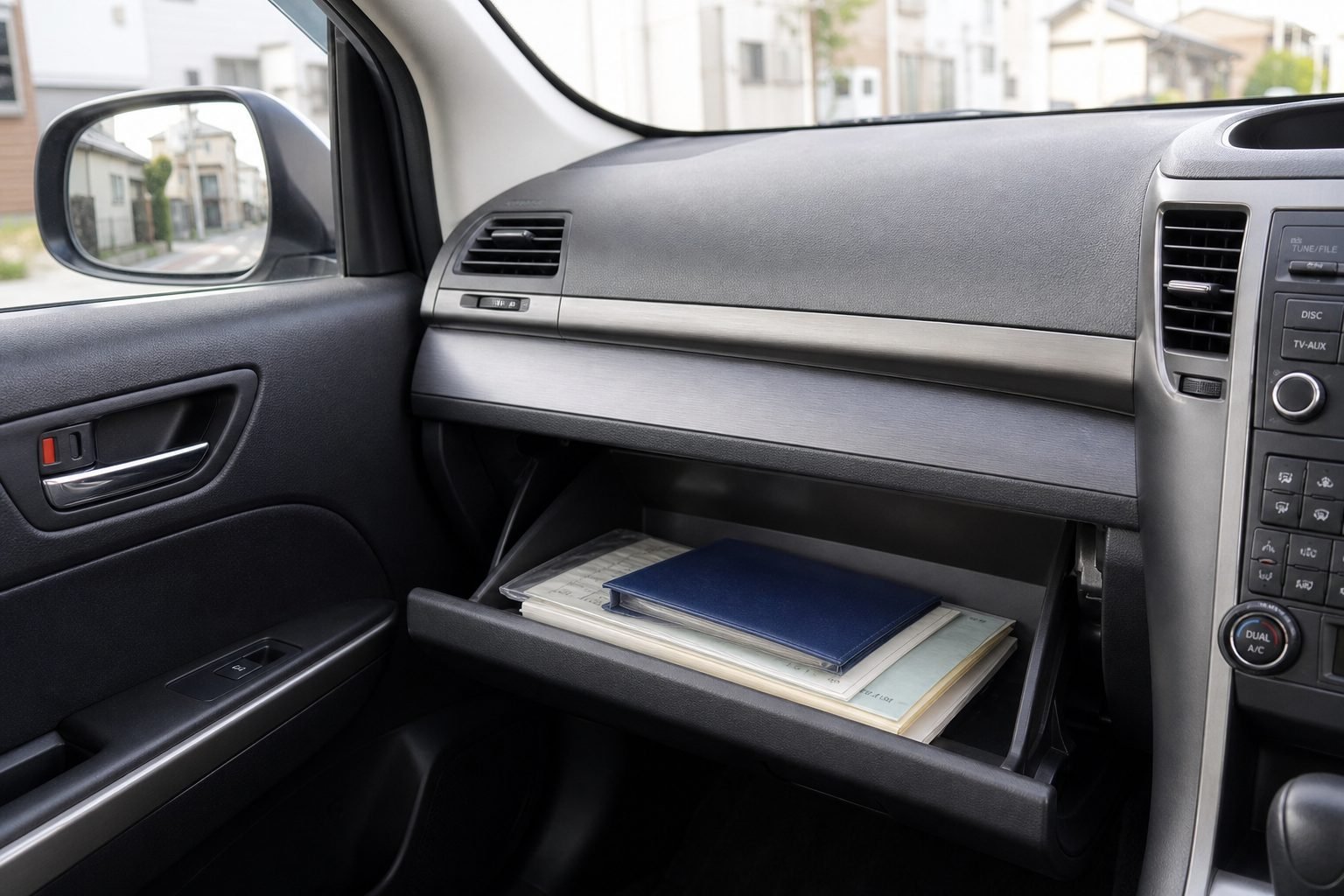
- Residence card and address that will match the 車検証 (or a clear story if it will not yet)
- License (and translation if required)
- Car: chassis / 車検証 copy, use (kei vs regular), shaken date
- Start date and time — coverage should exist before you turn the key
Name on 任意 should follow what the insurer requires relative to the 車検証. If KMC is still the registered owner for a day, say so; some policies will not cover a driver who is not the keeper.
6. What it tends to cost (order of magnitude, not a quote)
- 自賠責 — the 2026 24-month bands above (paid at shaken, not monthly)
- 任意 — widely scattered: a kei, Japanese license, older driver, modest 車両 can sit in the tens of thousands of yen per year; a young driver on a foreign license with full 車両 on a compact can be several times that. Only a binder is real
Kei vs regular running costs: kei vs regular. Yearly ownership: cost to own a car in Japan.
7. Civilian 車検証 vs CFA Sasebo / SOFA
If the car will be on base / SOFA plates, you follow the current VRO / PMV insurance list, not a random 任意 website. We are not a Navy vendor and cannot stamp VRO: Sasebo VRO. If you stay on Japanese plates as a resident, this civilian guide applies — English desk: English-speaking car dealer in Japan.
8. The day you buy from KMC JAPAN
- We confirm shaken / 自賠責 dates on the sheet or 車検証
- You bind 任意 (or your base-listed policy) for the first kilometre
- 車庫証明 and name change follow your city: parking-certificate drafts, Kyushu buying
- Do not drive home “tomorrow” uninsured because the insurer’s English line is closed
One-day or short 任意 products exist for handover gaps — they are still a contract, not a rumour. Ask an insurer, not us, to issue one.
9. If you have an accident
Stop, make the scene safe, call 110 when the police should attend (they usually should in Japan if there is damage or injury). Call your 任意 number next. Exchange names and 車検証 details. Do not sign documents you cannot read. This is not legal advice; your policy and the police instructions win.
10. When you leave Japan
Cancel 任意; unused months are often refundable on that company’s rules. Remaining 自賠責 usually rides with the car at 名義変更, export, or scrap — settle it in the deal, do not leave a car and a policy in your name after you fly: sell before leaving Japan. Buyback: kmccar.com.
Not insurance, legal, SOFA, or tax advice. Insurer, 車検 shop, and VRO documents override this guide. We sell and export cars; we do not bind cover.