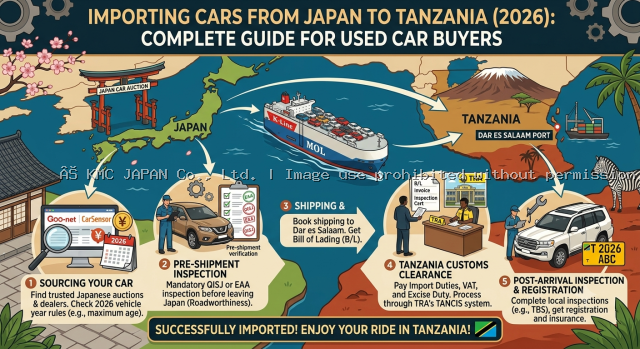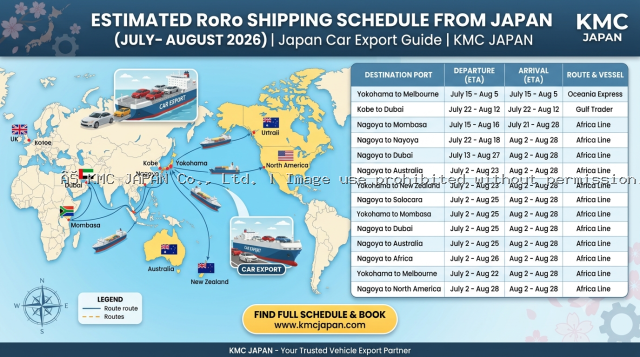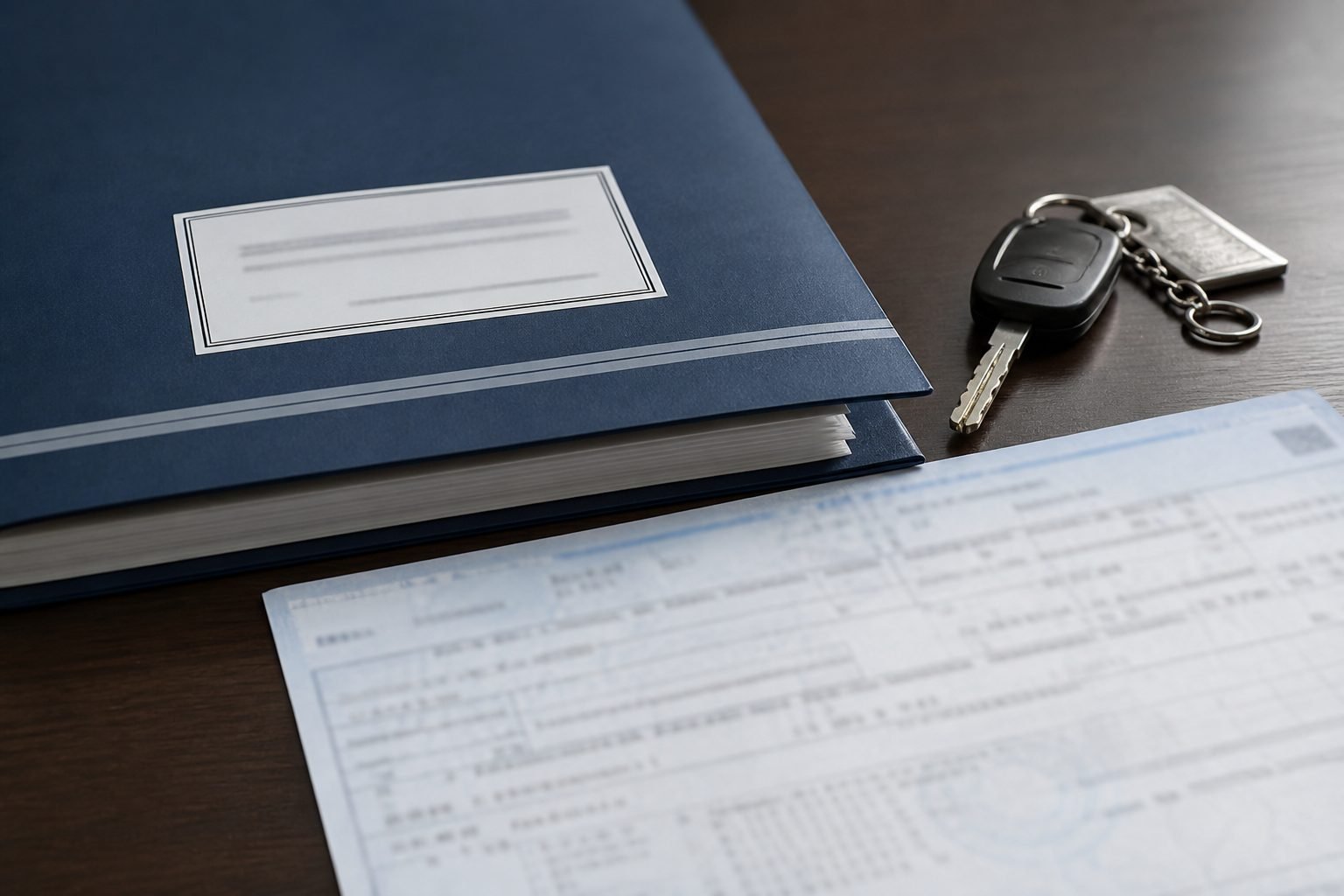
Importers say “Japanese export certificate.” In Japan the usual document is the 輸出抹消仮登録証明書 — issued after 輸出抹消 (export erasure) so the car is no longer registered for Japanese roads. Destination customs, KEBS, TRA, DVLA, NZTA and similar offices read this for chassis, engine, colour, manufacture year, and often first registration date. They do not grade your auction 4.5.
It is not the 車検証 (that is surrendered or replaced in the erasure). It is not the bill of lading. It is not an auction sheet. Mix those up and a 15-year age gate can fail on a car you thought was “2012.”
KMC JAPAN helps customers in Sasebo and across Kyushu find Japanese used cars, including affordable kei cars, compact cars, SUVs, minivans and hybrids — and we run 輸出抹消 and the export pack from Ogori, Fukuoka on cars we ship. We are not the 運輸支局. Forms follow the current transport-branch / 軽協会 counter.
Ask about export papers on a car Import guides by country
What the certificate is for
- Japan — proof the vehicle was taken off the domestic register for export, not left in someone’s name for tax and tickets
- Your country — identity and age. Kenya often cares about first registration; Tanzania often about manufacture year. Uganda’s used-car age cap is read from this paper, not the USS header. Confirm on the country page
- UK IVA / similar — many schemes want the original; you may not get it back
Keep copies, but do not ship the only original untracked. A lost certificate delays clearing more than a late RoRo.
What it typically shows
Exact boxes follow the current MLIT / association form. Buyers should find:
- Chassis number (must match the car, invoice, and BL)
- Engine number and maker / type
- Manufacture date and first registration date (both — they can differ)
- Colour, body, displacement as recorded
If those lines disagree with the auction sheet, stop. That is how meter and identity problems start: don’t get scammed, True Report.
How you get one (export path)
- The car is purchased (stock or auction). Japan-use 名義変更 is a different job: transfer ownership
- Plates are returned and 輸出抹消 is filed at the 運輸支局 or 軽協会 that applies
- The export certificate is issued; the car must leave Japan within the period printed on that process (the clerk’s date wins — we do not invent a nationwide day-count here)
- Ship RoRo or container. Ocean cost: ship a car from Japan. Quote language: FOB vs CIF vs CNF
Auction export uses the export proxy contract, not the Japan-domestic one: proxy bidding. Personal PCS cars: PCS sell or export, leaving Japan.
What it is not
- A mechanical warranty or auction grade
- SOFA / VRO out-processing — Sasebo VRO
- Destination duty paid
- A 車検証 you can drive on in Japan after erasure
How KMC JAPAN handles it
On cars we export, we file 輸出抹消 (or instruct the association) and send the certificate with the shipping set. English desk: English-speaking dealer. Inventory: cars.php.
Not legal or customs advice. The transport office and your destination authority override this page. Ask us which original travels with your unit before the ship sails.