Japanese exporters write FOB, CNF, and CIF on almost every offer. They are shipping terms, not a guarantee the car is cheap. A ¥300,000 hammer can still be a ¥300,000 FOB after auction fees — or not: hammer vs real cost.
CNF in the used-car trade is the old name for CFR (Cost and Freight) in Incoterms. We still say CNF because African and Asian buyers search it. Your contract should name the Incoterm and the port (FOB Hakata is not CIF Dar es Salaam).
KMC JAPAN helps customers in Sasebo and across Kyushu find Japanese used cars, including affordable kei cars, compact cars, SUVs, minivans and hybrids — and we export from Ogori, Fukuoka. We quote in writing. A WhatsApp “CIF all-in worldwide” with no port is a red flag: auction scam checklist.
Ask for FOB or CNF on a car Shipping calculator
FOB — Free On Board (named Japanese port)
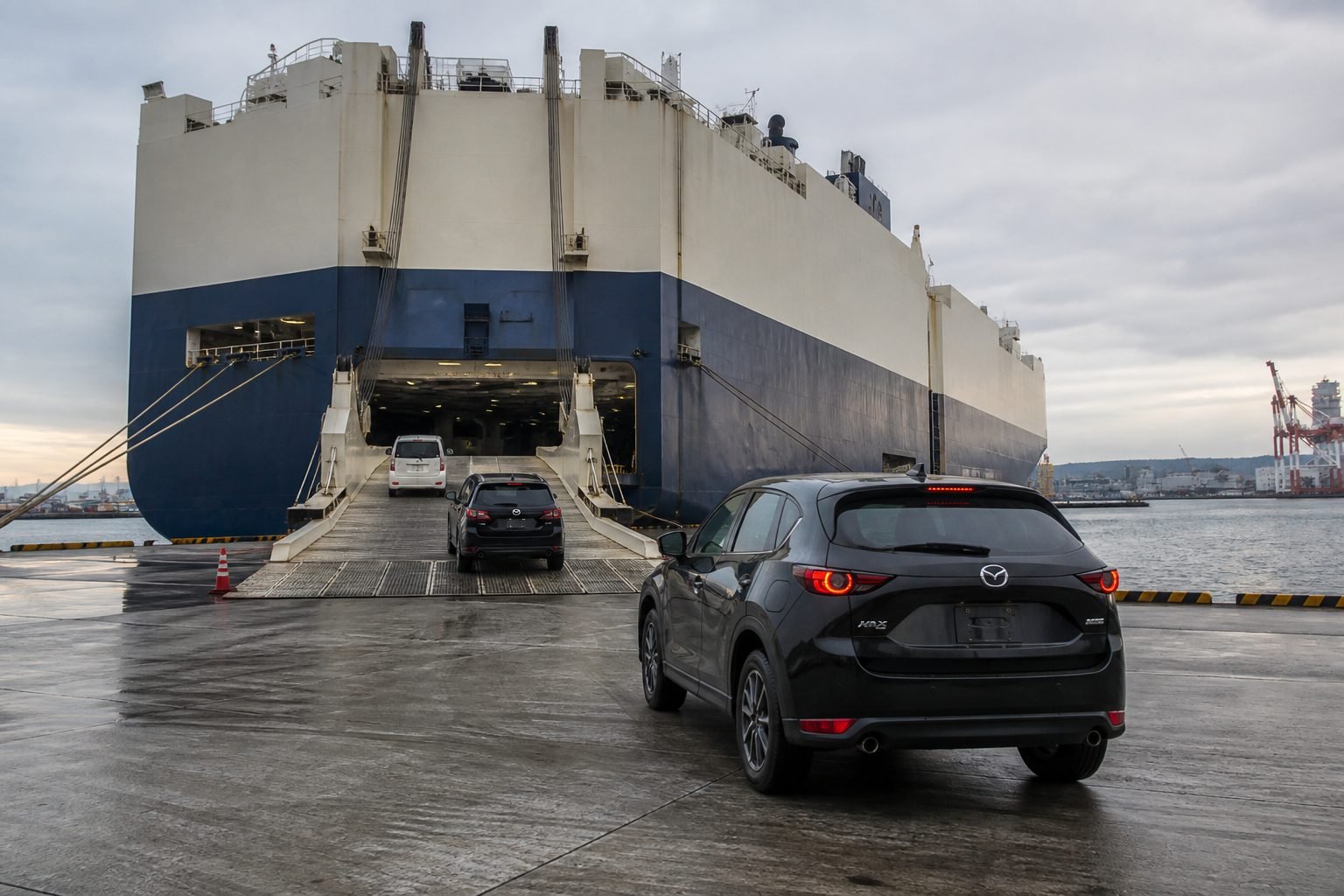
In ordinary car-export talk, FOB is the car made ready to leave Japan: purchase (stock or auction stack), export deregistration, inland to the load port we name, and loading as that quote describes. You (or your forwarder) take ocean freight, marine insurance if you want it, and everything after the ship sails — unless we add those lines separately.
What is inside our FOB is on the invoice for that unit. Do not assume tyres, extra photos, or a 60-day yard stay are included. Hakata / Moji / other Kyushu loaders are not Yokohama; 陸送 changes the number.
CNF / CFR — Cost and Freight (named destination port)
CNF (CFR) is FOB logic plus ocean freight to the port we name (Mombasa, Dar, Chittagong, etc.). You usually still arrange insurance unless the quote says CIF. You still pay destination duty, VAT/GST, clearing, and inland in your country. Those are not a flat percent of CNF — see each country’s import notes on this site, and the calculator as a planning tool, not a customs bill.
CIF — Cost, Insurance and Freight (named destination port)
CIF is CNF plus marine insurance of the kind stated on the policy (often a percentage of FOB + freight — we will not freeze a fake 2.5% as law). Read the certificate: what is covered, from where, to where, and the deductible. CIF is not “if the engine fails in Nairobi, KMC pays.”
Who pays what (typical car export)
| FOB Japan | CNF / CFR dest. port | CIF dest. port | |
|---|---|---|---|
| Car + Japan export process (as quoted) | Seller | Seller | Seller |
| Ocean freight to destination port | Buyer | Seller | Seller |
| Marine insurance | Buyer (if any) | Buyer (if any) | Seller (as quoted) |
| Duty, clearing, inland after arrival | Buyer | Buyer | Buyer |
Incoterms also talk about where risk passes. On classic FOB/CFR/CIF, that is often when the car is on board in Japan — even if the seller prepaid the freight. If the ship has a problem at sea, CIF insurance is the usual conversation, not a free replacement kei. Your signed contract beats this table.
What never sits in FOB / CNF / CIF
- Your country’s age, steering, and 修復歴 rules — tell us before we bid: proxy bidding
- Japan 乗り出し / 名義変更 — that is a domestic-use deal, not an export Incoterm
- SOFA / Sasebo plates — unrelated: VRO
How to compare two quotes
- Same car (chassis or lot), same Incoterm, same named ports
- Same list of Japan costs (auction fees vs stock)
- Freight validity (RoRo rates move)
- Insurance wording if CIF
A cheaper CIF than someone else’s FOB is not a miracle; they bundled the sea. A cheaper FOB that omits 陸送 is not cheaper. English desk: English-speaking dealer. Inventory: cars.php.
Not legal or customs advice. ICC Incoterms® rules and the destination authority win. Ask us to put FOB or CNF/CIF on one car, one port pair, in one email.