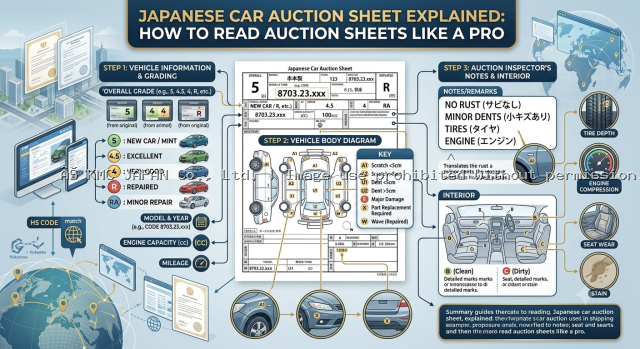
Japanese Car Auction Sheet Explained: How to Read Auction Sheets Like a Pro
If you're planning to import a used vehicle from Japan, understanding the Japanese car auction sheet is one of the most important skills you can learn. An auction sheet provides an independent inspection report prepared before the vehicle is sold at auction. It summarizes the car's condition, history, mileage, and any visible damage.
Whether you're buying a passenger car, SUV, van, truck, or hybrid vehicle, reading the auction sheet correctly helps you make informed decisions and avoid unexpected repairs.
What Is a Japanese Car Auction Sheet?
A Japanese car auction sheet is an inspection report created by the auction house before a vehicle is listed for sale. Professional inspectors examine the vehicle and record details such as its overall grade, mileage, interior and exterior condition, repair history, and equipment.
Each major auction house, including USS, TAA, JU, ARAI, CAA, HAA, and NAA, uses a similar format, although small differences may exist between auction companies.
Why Is the Auction Sheet Important?
The auction sheet gives buyers a clear picture of a vehicle's condition before bidding. Since international buyers often cannot inspect the vehicle in person, the auction sheet becomes one of the most valuable sources of information.
- Shows the overall condition of the vehicle.
- Identifies previous accident or repair history.
- Confirms recorded mileage.
- Highlights scratches, dents, and rust.
- Lists factory and optional equipment.
- Helps estimate repair costs.
- Supports confident bidding decisions.
Main Sections of a Japanese Auction Sheet
1. Vehicle Information
This section contains the basic specifications of the vehicle.
- Manufacturer
- Model
- Model code
- Registration year
- Engine size
- Transmission
- Fuel type
- Drive system (2WD or 4WD)
- Color
- Chassis number
- Mileage
2. Auction Grade
The auction grade summarizes the vehicle's overall condition. Although grading standards may vary slightly between auction houses, the following guide is widely used.
| Auction Grade | Meaning |
|---|---|
| S | Almost new, very low mileage. |
| 6 | Excellent condition, nearly new. |
| 5 | Outstanding used vehicle with minimal wear. |
| 4.5 | Very clean vehicle in excellent condition. |
| 4 | Good condition with normal wear. |
| 3.5 | Average condition with noticeable wear. |
| 3 | Older vehicle requiring repairs or maintenance. |
| 2 | Poor condition. |
| R / RA | Previously repaired accident vehicle. |
| A | Auction company-specific special grade. |
| 0 | Modified or special category vehicle. |
3. Interior Grade
The interior is graded separately.
| Grade | Description |
|---|---|
| A | Excellent condition. |
| B | Good condition with light wear. |
| C | Average condition with visible wear. |
| D | Poor condition requiring repair or cleaning. |
4. Exterior Damage Diagram
Most auction sheets include a vehicle diagram where inspectors mark visible damage using standardized codes.
| Code | Meaning |
|---|---|
| A1 | Small scratch |
| A2 | Medium scratch |
| A3 | Large scratch |
| U1 | Small dent |
| U2 | Medium dent |
| U3 | Large dent |
| Y1 | Small crack |
| Y2 | Medium crack |
| Y3 | Large crack |
| W1 | Minor repaired panel |
| W2 | Noticeable repair |
| W3 | Poor quality repair |
| S1 | Rust |
| S2 | Heavy rust |
| C1 | Corrosion |
| C2 | Severe corrosion |
| X | Panel needs replacement |
| XX | Panel has already been replaced |
5. Inspector's Comments
The inspector writes additional observations in Japanese, which may include:
- Engine noise
- Oil leaks
- Transmission condition
- Air conditioning performance
- Suspension issues
- Warning lights
- Smoking history
- Flood damage indicators
- Modifications
If you do not read Japanese, request a professional translation before placing a bid.
Common Auction Sheet Symbols
| Symbol | Meaning |
|---|---|
| PS | Power Steering |
| PW | Power Windows |
| AC | Air Conditioning |
| AW | Alloy Wheels |
| SR | Sunroof |
| NAVI | Navigation System |
| TV | Television |
| ABS | Anti-lock Braking System |
| SRS | Airbags |
Tips for Reading an Auction Sheet
- Always compare the auction grade with the damage diagram.
- Review the inspector's comments carefully.
- Do not judge a vehicle only by its grade.
- Check mileage consistency.
- Understand accident grades such as R and RA before bidding.
- Request a professional translation if needed.
- Ask your exporter to inspect the vehicle whenever possible.
Common Mistakes Buyers Make
- Ignoring the inspector's notes.
- Assuming Grade 4 means a perfect vehicle.
- Not understanding damage codes.
- Bidding without reviewing the auction sheet.
- Buying based only on photos.
How KMC JAPAN Helps Buyers
At KMC JAPAN, we help customers understand every detail of a Japanese auction sheet before bidding. Our experienced team provides accurate auction sheet translations, explains damage codes, reviews inspection reports, and helps buyers choose vehicles that match their budget and requirements.
Conclusion
A Japanese auction sheet is your most valuable source of information when purchasing a vehicle through an auction. Understanding the grading system, damage symbols, and inspector's comments allows you to make informed decisions and reduce the risk of unexpected repairs. Always review the auction sheet carefully and work with a trusted exporter like KMC JAPAN for professional guidance.