How to Read a Japanese Auction Sheet
Auction grade, interior/exterior scores, and inspector remarks decide whether a JDM car is worth bidding — before you even check the destination age rule.
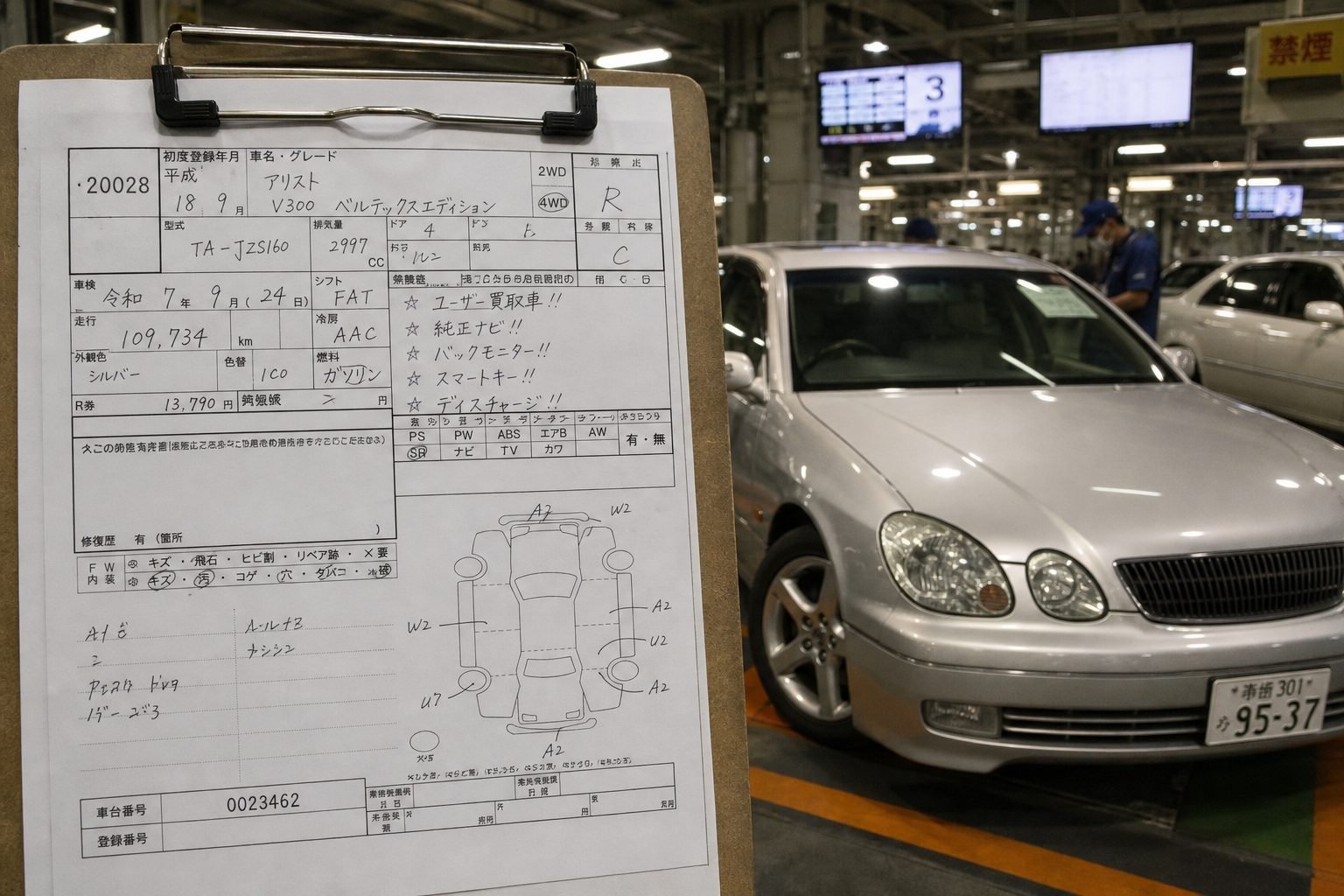
A Japanese auction sheet is an inspector’s snapshot of one car on one day. It is not a destination customs document and it is not a KEBS or NZTA certificate. Use it to decide whether to bid; then confirm export-certificate year and steering against the country regulation page.
Overall grade
Major auction groups use a letter/number grade. In export practice:
- 5 / S — very clean, low defect. Uncommon and priced accordingly.
- 4.5 — the usual export sweet spot: honest minor marks, structurally sound.
- 4 — usable; budget paint or interior work.
- 3.5 / 3 — more defects or age. Only bid if photos and remarks are clear.
- R / RA / *** — repaired or accident history. Treat as a specialist buy, not a family runabout.
Grade is not mileage. A grade 4 car with 30,000 km can still fail Kenya’s 8-year first-registration rule.
Interior and exterior scores
Letter scores (A–D) describe cabin and paint/panel condition. Inspector map marks show scratches, dents, and rust. Ask us to translate remarks before you bid if the sheet is only in Japanese.
What KMC JAPAN checks next
- Chassis, model code, and engine against the destination (RHD, CC, body type).
- Manufacture year and first registration on the export certificate, not only the auction header.
- Whether the destination needs QISJ, Intertek MOZ, JEVIC/NZTA, or JAAI.
Related: Choosing a Japanese used car for export and Japanese export certificate explained.
Ready to import from Japan?
Tell us the destination and the vehicle. We check eligibility before you commit.